Busy and Fulfilling Five Days

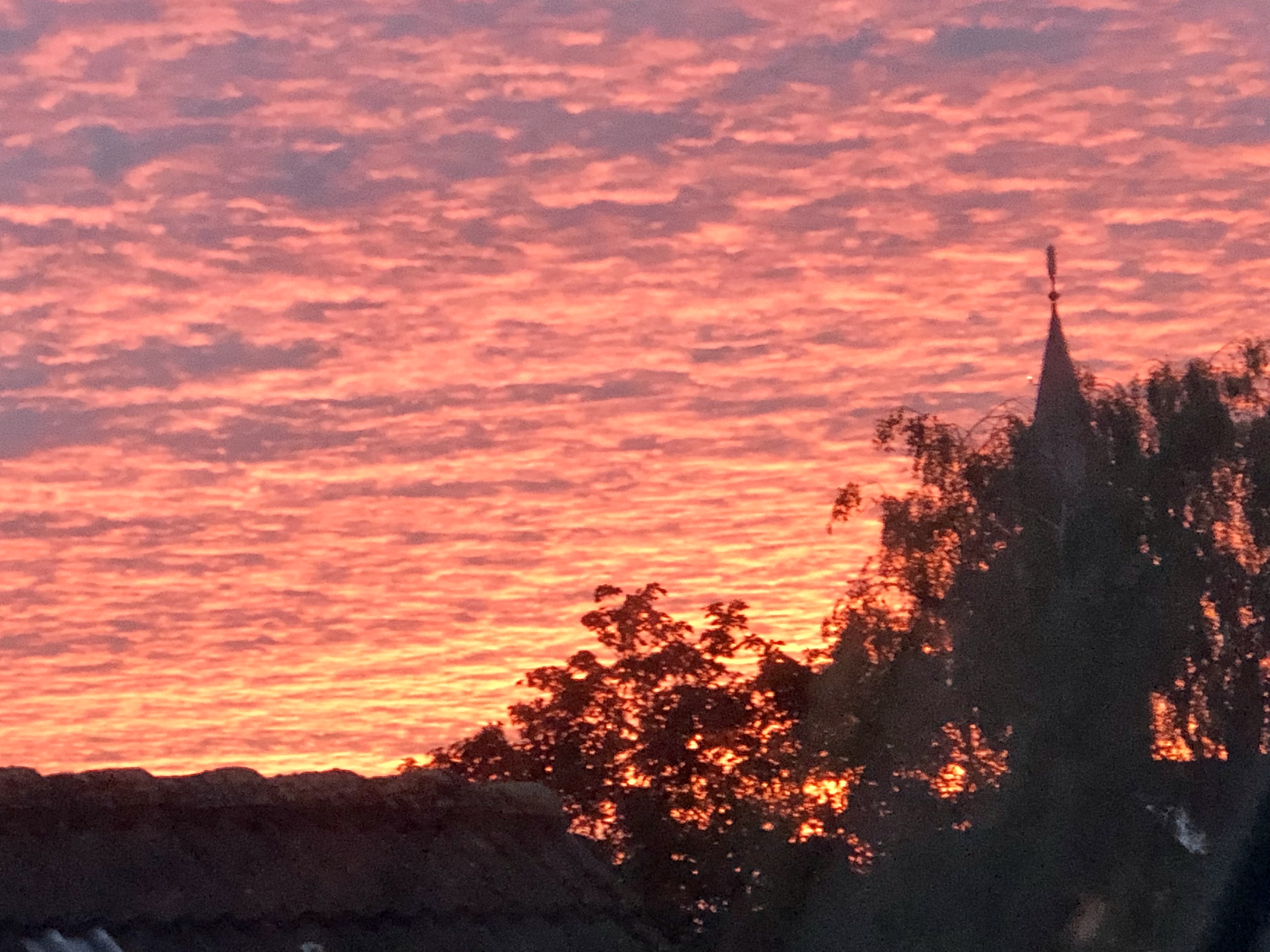
Sunrise over Husum

Road Trip

If Vickie and I were a baseball team, we have just completed our longest “Road Trip” of the season.

At noon on Friday we began our two and a half hour train trip to Husum. There we were the guests for four nights in the charming “Holiday Apartment” of our wonderful friends, Rita and Horst Blunk. (See Blog post: “Rita and Horst.”)

This past Shabbat eve it was my privilege once again to conduct Kabbalat services at the Jewish synagogue in Friedrichstadt. The synagogue was not totally razed by the Nazis on Kristallnacht (as so many others were). The Nazis threw hand grenades inside and destroyed all Jewish artifacts.  Then they commandeered it as an Officers’ Headquarters. 

After the war it was returned to the Jewish community. There is a large photograph on glass where the ark once stood that shows the destruction of that spot.

Since there was no longer a Jewish community in Friedrichsstadt, the synagogue became a cultural center and Jewish museum. In 2015 I had the privilege of conducting the first Jewish service in that city since the Nazi takeover.

What an occasion that was. 70 people jammed the small sanctuary, at least 50 of whom were representatives of the Christian community who had come to pay their respects.

This Shabbat’s service was a much smaller affair, and I guess that is a good thing. I am glad that a Jewish service in Friedrichstadt is no longer a novelty.

On Shabbat, Rita and Horst had planned to take us on an excursion to the North Sea Island of Sylt. The weather, though, was too cold, so instead we toured other charming areas in the North Sea Region. It was a wonderful day.

We see more sheep, cows and horses than people (almost) in Germany’s beautiful North Sea coastal region.

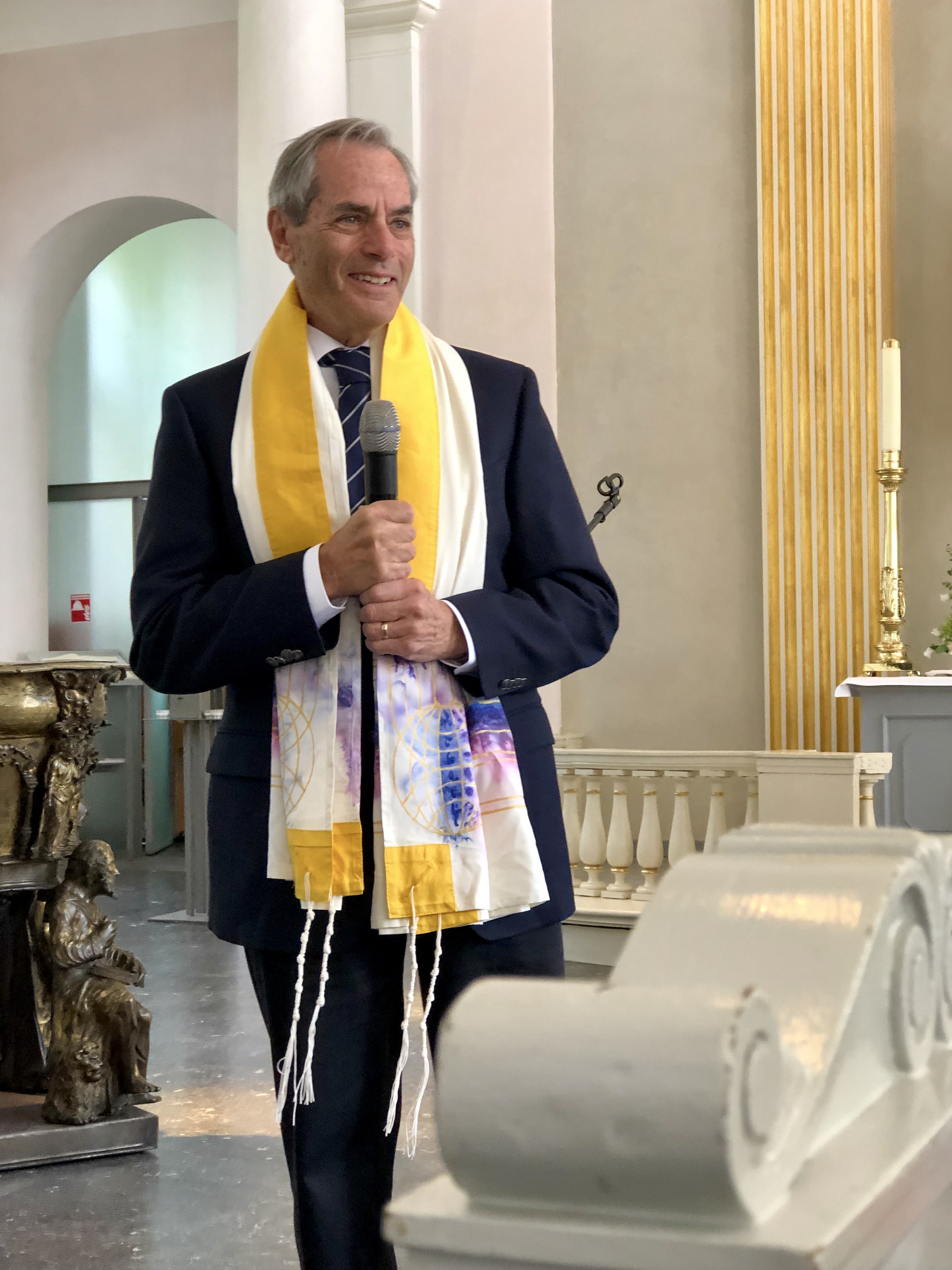
Sunday was a long, busy and very fulfilling day. In the morning, I delivered the sermon at the St. Marien Lutheran Church in Husum at the invitation of Pastor Friedemann Magaard. Pastor Magaard has an admirable history of activity aimed at interfaith understanding and affirmation. To acknowledge and protest the uptick in anti-Semitic activity in Germany (see my essay on this subject in ReformJudaism.org https://reformjudaism.org/blog/2019/06/03/rising-anti-semitism-germany-ground-assessment?utm_source=Share&utm_medium=social&utm_campaign=BlogPost&utm_content=Fuchs). Dr. Magaard wore a kipah during the service.

It was a privilege to return to his church. 

Speaking in the Marienkirche (St. Mary’s Church) in Husum

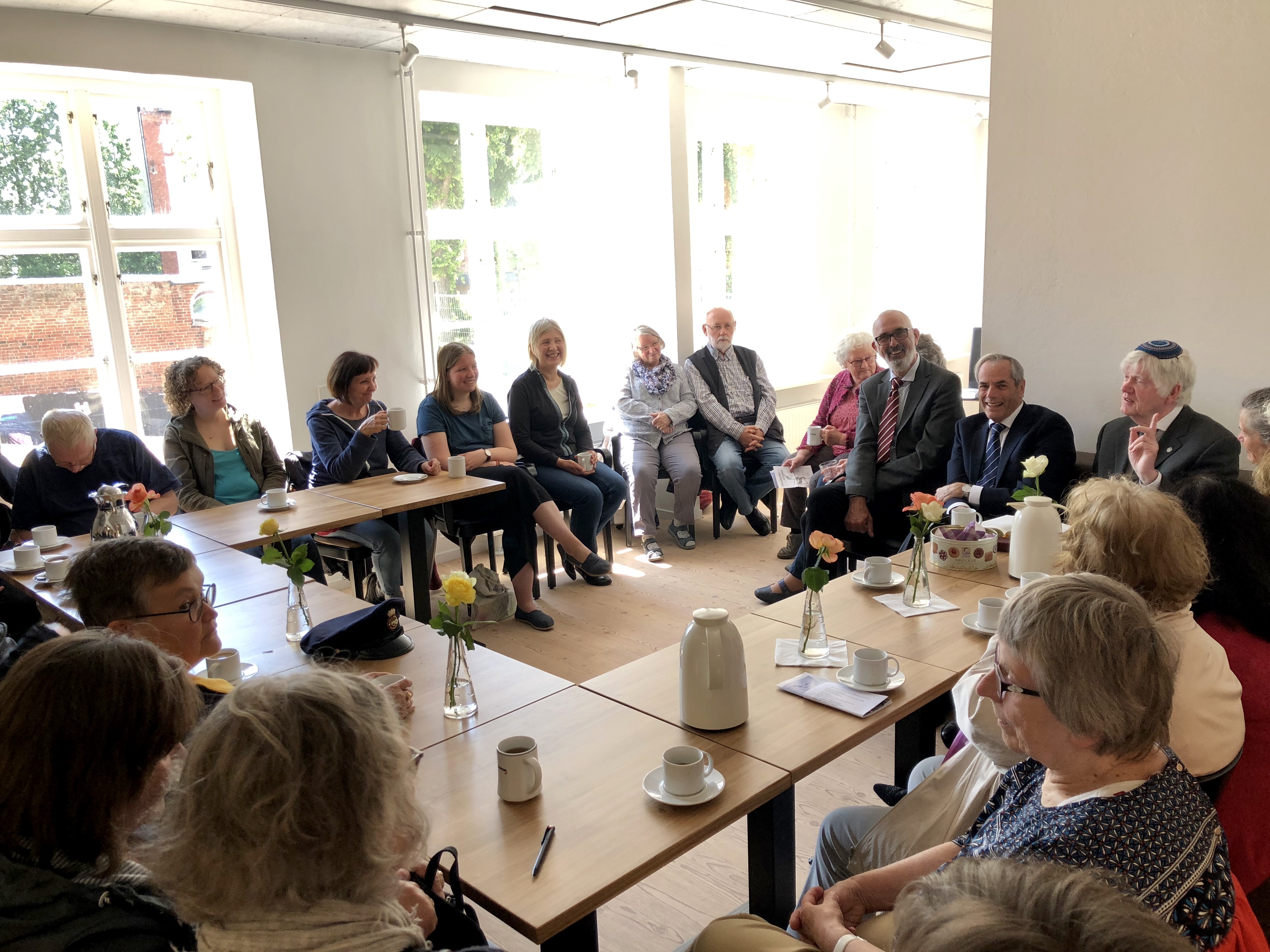
During the service, Dr. Magaard invited any interested worshippers to join me for a study session in their new community building next door. I wondered if anyone would come, but to my joy thirty people crowded into the small room to study the coming week’s Haftarah portion from Hosea. I was moved by the depth of the questions the participants asked and by the observations they shared.

Torah study at Marienkirche, Husum. To my left is Dr. Uwe Ehrich, who translates for me in Friedrichstadt and Husum.

Afterwards, Rita, Horst, Vickie and I enjoyed a scrumptious lunch prepared by Friedemann’s wife, Andrea, an Urgent Care physician, in the charming garden of their lovely home.

In the evening at the invitation of Dr. Marcus Friedrich, I delivered the sermon at services in the magnificent St. Nickolai-kirche, the largest cathedral in Flensburg. 

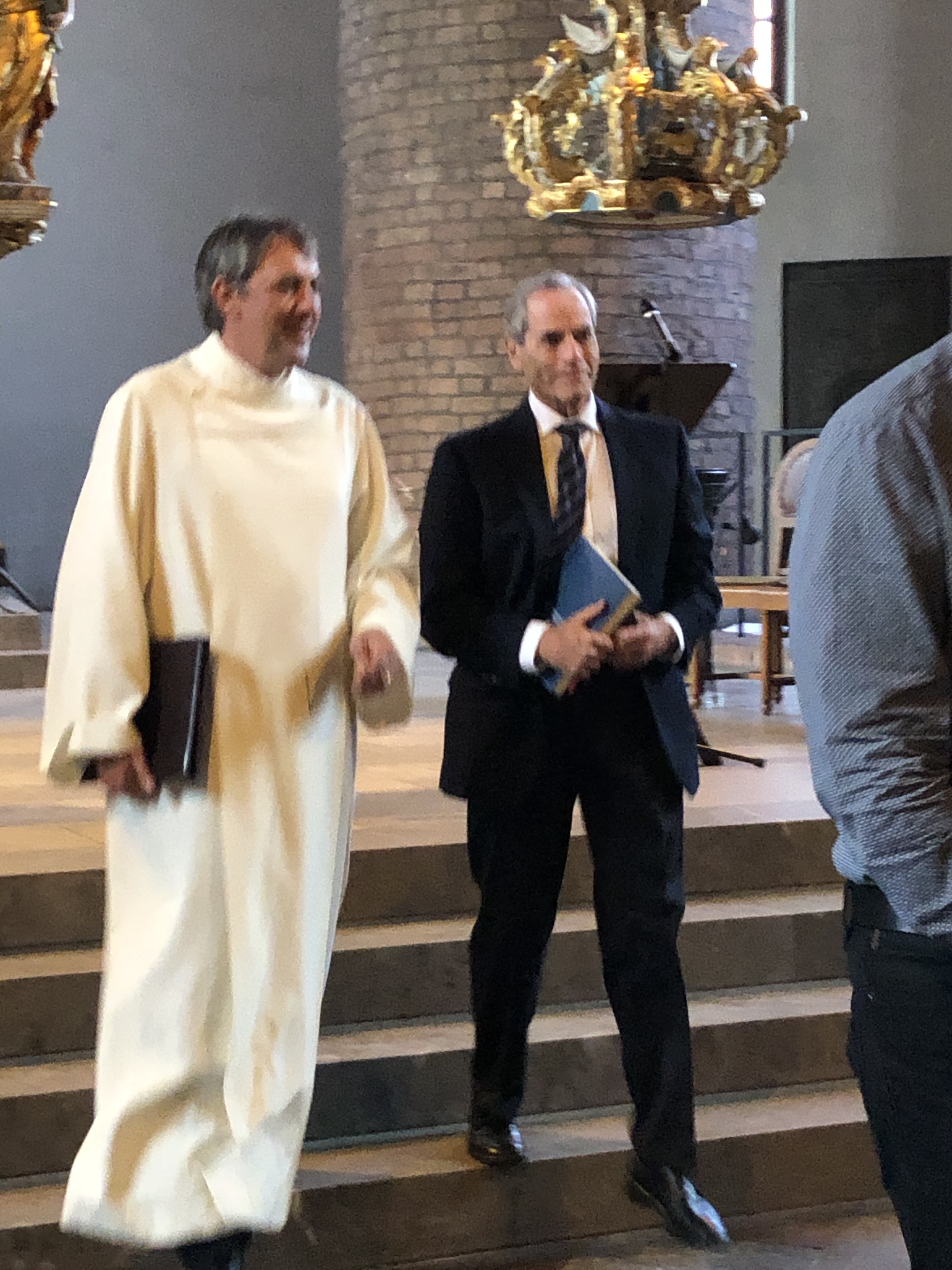
Dr. Marcus Friedrich and I at the conclusion of the service in the Nikolai-kirche in Flensburg

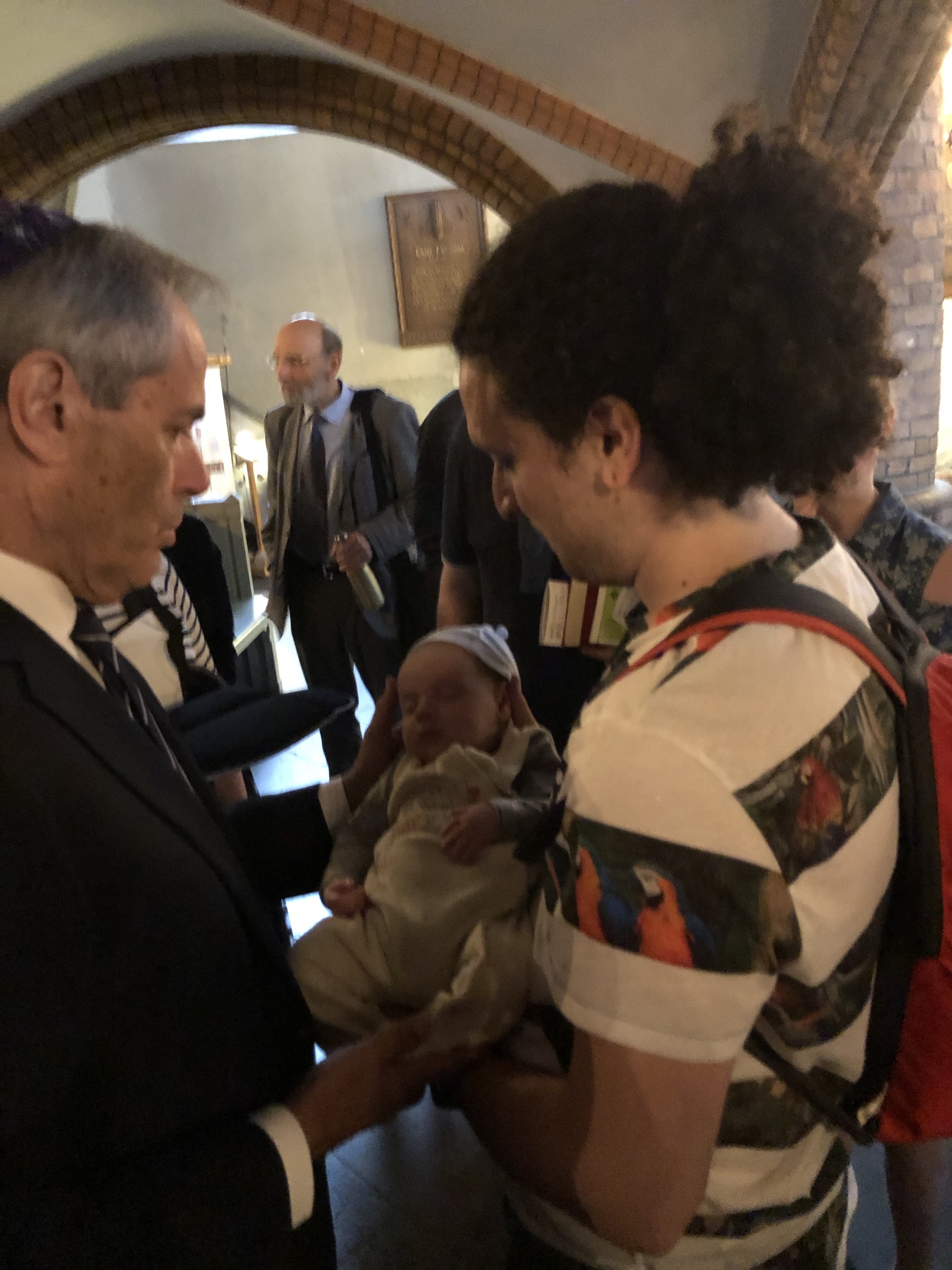
After the service a young couple, the woman from Ireland and the man from Israel asked if I would say a blessing for their infant son. I was deeply moved by their request and was happy to do so.

Offering a blessing for this couples infant son

On Monday, I presented a program run at the Catholic Church in Flensburg. The organizer of the program, Claudia Linker, who wrote a generous endorsement on the back cover of And Often the First Jew, skillfully translated my remarks into German.

Tuesday during the day Vickie and I taught a wonderful group of HS students at the Tast Gymnasium in Flensburg. Then in the evening Rita and Horst drove us to Kiel for the fourth of seminar sessions I am conducting on “Revelation in Jewish Thought.” After the seminar Pastor Martin Pommerening drove us back to Bad Segeberg where we tumbled into bed with wonderful memories of a fulfilling trip and in eager anticipation of a “day off” Wednesday. 

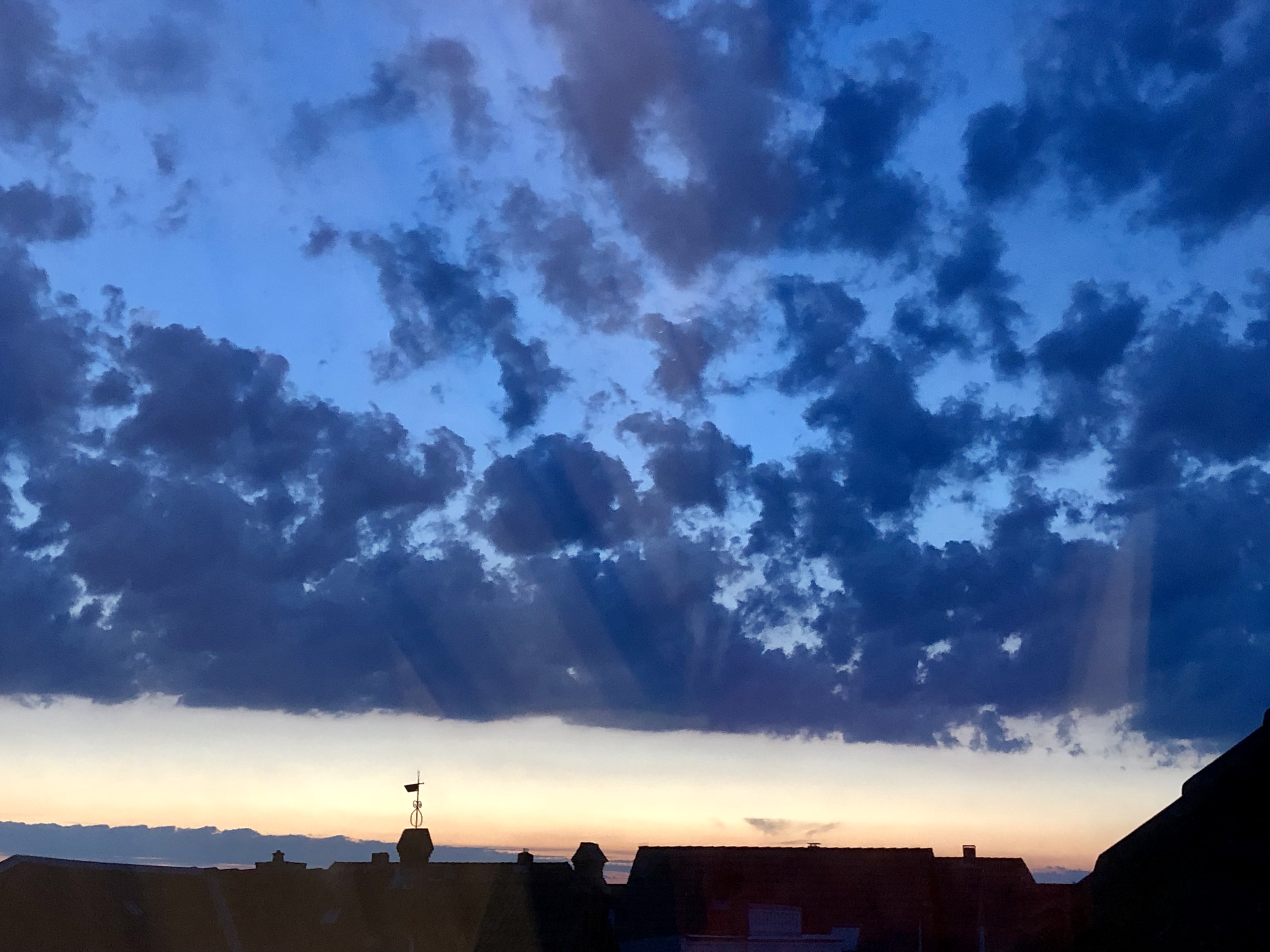
Nightfall in Husum

Back to Neumünster

Neumünster is where it all began in 2014 for Vickie and me here in Germany.

Since that time we have visited the Holstenschule, the academic school in that city some 20 times. Yesterday among the eleventh graders we addressed were several,who remembered us from when we spoke to their lower school grade five years ago.

Today we return to address another group of upper school students on the “Persecution of Jews ” in the Nazi era.

Yesterday we were asked:

“Do you still fear anti-Semitism?

“Yes,” I answered.

Anti-Semitism is a disease not like Polio, which we can cure, but like arthritis which we only hope to control.

It takes many forms. Among them:

Political — Jew control the government

Economic — the Jews control international banking.

Religious — the Jews killed Jesus

Racial — the Jews mutate an inferior gene pool and must be exterminated. That is the origin of the word, “genocide.” Sociologists coined this word to try to describe what Hitler attempted to do to us Jews: extirpate our polluted gene pool.

There can be no doubt. Anti-Semitic acts are on the rise in Germany in other places in Europe and in the United States.

Do I still fear anti-Semitism?

We all should!

Do I feel we do any good in Neumünster?

I hope so, but one thing is sure. We must keep,trying.

Tullus

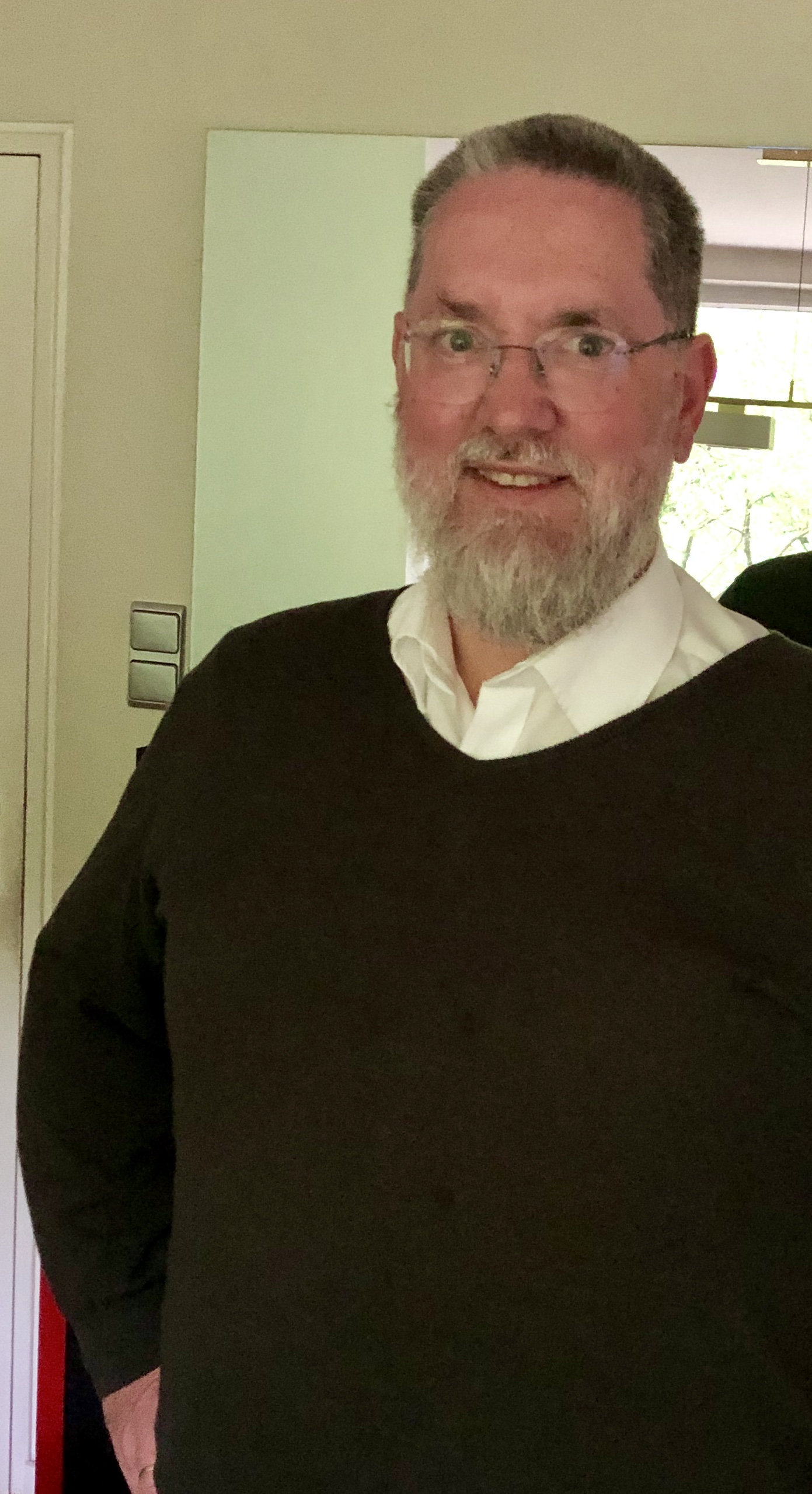
Dr. Tullus Fuchs and I

Clearly, Dr. Tullus Fuchs is taller than I am, but this non-Jewish, German, non-related to me psychoanalyst and I are on the same page when it comes to working toward reconciliation after the Holocaust.

Vickie took this photo of us standing on the site where the Great Synagogue of Hamburg once proudly stood until the Nazis burned it to the ground on Kristallnacht, November 9, 1938. The square is named in memory of Hamburg’s late Chief Rabbi, Joseph Carlebach, killed by the Nazis.

Dr. Fuchs and we met by chance in Jerusalem a couple of weeks ago when Vickie overheard that his name is Fuchs and started a conversation.

He was in Israel to meet with groups of Israeli Jews and Israeli Palestinians interested in peaceful reconciliation. In particular he attended sessions led by Jewish and Palestinian parents who have lost children yet share a vision of the two peoples living together peacefully.

One of the Palestinians referred to the meeting of bereaved parents as, “the only group he can think of whose stated goal is NOT to increase its membership.

Tullus also does work in Germany with descendants of Holocaust victims and Holocaust perpetrators eager to learn from the past and work toward a future of reconciliation and kindness.

Over a very nice lunch in Hamburg we discussed our family histories: his of relatives who were Nazis and ours of displacement during that horrible period in German history.

Our fruitful discussion led me to even deeper commitment to the mantra we share in every synagogue, school and church in which we speak here:

Wir können die Vergangenheit nicht ungesehen machen, aber wir können gemeinsam an einer besseren Zukunft arbeiten.”

We cannot undo the past, but the future is ours to shape.

Each in our own way and employing our different skill sets, Tullus, Vickie and I are working to make the future better for our children, grandchildren and the generations to follow.

My Theology in One Tee Shirt

My Theology in one Tee Shirt

Translation:

“And God said …”

Then all the scientific stuff

“And there was light.”

In other words:

Genesis does NOT tell us HOW the world was created.

But it tells us a great deal about WHY.

  • However it was done God initiated it
  • It was not an accident. The creation of the world is purposeful and meaningful.
  • Therefore our lives have (or at least they should have) purpose and meaning.
  • We are the only creatures created “in God’s image.” That does not mean we look like God. It means we have the most power to affect our environment and the quality of life in society for better or ill.
  • Once each week we need a day to step back and think: “How am I using my talents to make a better world.

Yes Genesis tells an awful lot about WHY we are here and what God wants from us!

Martin Answers God’s Call

Pastor Martin Pommerening

After 31 years of dedicated leadership of the Versöhnerkirche in Bad Segeberg, Germany Pastor Martin Pommerening, like Abraham of old has heard and heeded God’s call:

Go forth!” (GN 12:1)

He has accepted the position as Pastor of the St Peter and St Paul Church in Bad Oldesloe.

I consider it a great personal honor that Martin, with the approval of the Propst (Dean of Regional Pastors) Dr. Daniel Havemann has invited me to participate both in his service of farewell in Bad Segeberg and in his inaugural service in Bad Oldesloe.

 At the age of 61, it is not easy to begin a new pastorate. But Martin is so filled with enthusiasm and energy for the new challenge that awaits him; one has to believe he will be successful.

For me, Martin is a role model for what a spiritual leader should be.

He is a man of deep faith and great wisdom. Most importantly he cares deeply about people and their well-being.

Vickie and I have known Martin for five years now. We have been guests in his home for extended periods during each of those five years. There is no end to what Martin has done and continues to do to make our stays comfortable and productive.

I have no doubt whatsoever that the new church he will lead in Bad Oldesloe will be greatly blessed by his ministry.

Bar Mitzvah Bookends

Parashat Behukotai, the final Torah portion of the Book of Leviticus, was the portion from the Torah read by my first ever Bar Mitzvah student, Jeff Sovelove, 45 years ago.

I love the opening verses of this portion because they contain words that represent our highest hope as Jews and as human beings: V’ain Mahreed, “None shall cause fear,” or, more popularly: “None shall make them afraid.” (Leviticus 26:6)

The verse appears 11 times in the Hebrew Bible, most famously as the climatic line of Micah’s famous prophecy, “Everyone shall sit under their vine and under their fig tree, and none shall make them afraid.” (Micah 4:4)

We dream of, and hopefully, we work for a world where people have no reason to fear.

I had not seen Jeff since we left Columbia, MD in 1986, but miraculously we reconnected in 1999, and to my delight he appeared at HUC in New York when I received my honorary DD degree that year.

I have not seen him since that day, but I think of him often.

He worked so hard to prepare for his Bar Mitzvah. I was and am so proud of him.

I thought of Jeff a lot during the six months I worked with Ben Uslan, my most recent Bar Mitzvah candidate. Ben lives in North Carolina and is the grandson of two of our current congregants in Sanibel, Florida.  After visiting last year, Ben and his parents asked if was possible to celebrate his Bar Mitzvah with us. 

Ben too worked hard, learned much, and I am equally proud of him.

He is likely, (given the demographics of Bat Yam Temple of the Islands, a congregation consisting largely of retirees that I now serve) the last thirteen-year-old Bar Mitzvah candidate I shall see for a while. I think of him and Jeff, therefore, as my “Bookend B’nai Mitzvah Students.”

In between them I have tried to nurture a love for our tradition in hundreds of pre-adolescents entrusted to my care.

By no means have I always been successful but I always gave each student my best effort to help him or her have the most meaningful experience possible.

For me, “meaningful” does not equate to the number of verses the student prepares or how beautifully he or she chants from the Torah or leads the service.

Many students – Ben and Jeff included – preferred to read with expression and feeling rather than chant.  I always felt and I still believe that what a child learns and retains about the content and meaning of her or his Torah and Haftarah portion is MUCH more significant than the manner in which he or she presents it on one special day.

As my students know I expect them to remember forever the content and even some of the key vocabulary of their portions. I am gratified that many do. I am glad too, that many still connect with me on Facebook and share with me lessons from their Torah portions when I wish them a happy birthday. 

I hope some who are in the area will attend on November 1 when I speak at Temple Isaiah, my first congregation, as part of their fiftieth anniversary celebration. It will mean so much to me to see any of them who will come.

When Jeff became a Bar Mitzvah, Vickie and I were a young couple, and we had not yet had children. As Ben read from the Torah our older children were already choosing dates and planning details of their first child’s Bar Mitzvah.

How did the years pass so quickly?

As for our grandchildren, Vickie and I pray that when each one comes to the Torah, he or she will look at the day as more than another milestone. Rather we hope they see it as the beginning of a life long encounter with our venerable tradition that will inspire each of them – in his or her own way – to work for a world in which V’ain mahreed, a world in which no one any where shall cause any one else to be afraid.

In Response to the NYT Magazine Article on Rising Anti-Semitism in Germany

When it comes to the rise of anti-Semitism in Germany, the first observation is: “It’s complicated.”

Vickie and I are spending five weeks there speaking about the Shoah and reconciliation in several schools. In addition I am teaching with that end in mind to interfaith groups in synagogues and preaching in Christian churches encouraging them to learn from the past in order to create a better future.

Because we are here, it did not surprise me when several people from back home, including my daughter Sarah Jenny and the president of our Congregation, Bat Yam Temple of the Islands sent me the disturbing articles about the new anti Semitism in Germany by James Angelos in the May 21 Sunday New York Times Magazine.

https://apple.news/A4jkD2RV9Qs–ZXdJXlh1OA

For many years I have characterized anti-Semitism as a chronic condition, like arthritis. You can try to keep it under control, but you cannot cure it.

Anti-Semitism, like the Hydra of Greek mythology is a monster with many heads. When you attack one, two more emerge. Anti-Semitism comes from the left and the right. Politics, economics, religious beliefs and racist theories all have motivated it throughout history, and each of these forces come into play when discussing its re-emergence in Germany.

Two additional realities play into German life today: 

One is that the Jewish population of 20,000 left after the Holocaust in Germany has swelled to 200,000. This increase is due in the main to an influx of immigrants and refugees from the Former Soviet Union.

The other is the inflow since 2015 of Syrian refugees who have been raised in an atmosphere where Israelis –synonymous in the minds of many, though not all, with Jews—are the enemy.

The paradox is that Russian Jews because of their native land’s long time support of the Arab war effort against Israel align themselves in Germany with the right wing AFD (Alternative for Germany) party. That party is under scrutiny for promoting neo Nazi activities. But their staunchly anti-Syrian refugee stance is what attracts many Russian Jews to them

Yes, “It’s complicated.” 

As the NYT article notes: “It can be difficult to determine the root of anti-Semitic crimes. When researchers looked at all reported anti-Semitic incidents in Berlin in 2018,they were unable to determine the ideological motivation in nearly half the cases.”

  • What is not complicated is that there has been a 20% rise in anti-Semitic crimes — to the current level of 1,799 – from 2017 to 2018.
  • What is not complicated is that 30% of those who responded to a 2015 ADL survey in Germany “hate Jews because of the way they behave.”

Felix Klein, Commissioner for Jewish Life in Germany cares less about parsing the different Hydra-heads of the new anti-Semitism in Germany and more concerned with controlling it:

“The right strategy,” he notes, “is to denounce any form of anti-Semitism. I don’t want to start a discussion about which one is more problematic or dangerous than the other.”

Fortunately, in our travels, speaking and teaching in different parts of Germany, those whom Vickie and I have encountered have without exception treated us with respect and dignity as most welcome guests.

But still for us, there is a “Fear Factor.”

We are not naïve. Our minds’ eyes cannot eliminate the vision of Rottweilers and SS soldiers searching for Jews in the beautiful forests our trains pass en route to, Kiel, Neumünster, Bad Oldesloe, Hamburg, Berlin and through the Black Forest region en route to Freiburg.

Our “Fear Factor” compounds itself as we both acknowledge that what James Angelos reports about Germany is also occurring in eerily similar fashion in the United States today.

Both in Germany and in the United States, the government and educational authorities should take to heart Felix Klein’s advice:  Denounce anti-Semitism through educational forums, public service announcements and school programs like the one Vickie and I present. Every school should educate students to learn from the horrors of the past so as not to repeat them.

In addition there should be swift sanction for anti-Semitic speech and severe punishment for anti-Semitic acts of violence.

No Jew should ever fear to wear a Star of David or Kipah in public. For that matter no Christian should fear wearing a cross, no Muslim a hijab, and no Sikh a turban. Germany and all other countries should do all in their power to become safe places for people of all religions to publicly identify with their faith.

I Hope So

Below: Pastorin Britta Taddiken, who has become a dear friend to Vickie and me, helps me set up for my “Ansprache” at the Thomaskirche Motet service last Friday afternoon. (Photo: Dr. Robert George Moore)

28057440_UnknownAs I climbed the 16 steps to the “Preacher’s Perch” in the famed Thomaskirche in Leipzig at the Motet service, Friday afternoon,** many thoughts filled my head.

First and Foremost: How wonderful that the city my father left as a prisoner, welcomes me back to preach from this historic pulpit.

But nagging questions came to mind:

Knowing that none of the (according to the estimate of Pastor Martin Hunderdmark who partners with Pastor Britta Taddiken as Spiritual Leaders of theThomaskirche) 1500 people packing the Cathedral had come to hear me, what were they thinking when I was introduced? What will they think as I speak and after I finish?

I imagine some thought, “What do we need with a rabbi interrupting the beauty of the Motets by Johann Sebastian Bach, Heinrich Schütz, Claudio Monteverdi and Johann Kuhnau? Why in the midst of such beauty does he again remind us of Germany’s shame?

I imagined some would laugh, at least inwardly at my horrid –despite hours of practice – German pronunciation. I cannot blame them for that. 

But my two biggest questions were:

  • Would my father approve of us coming to Germany in the first place? Would he approve of our efforts to teach and speak in schools, synagogues and churches? Despite the assurances of many that he would be pleased, I myself, remain unsure.
  • Finally, I asked myself, as I momentarily felt alone in the full cathedral, “Are you up here for an ”ego flight,” or do you really think your message will make a difference?

As I spoke I could see that people were paying attention and that clearly some resonated to my message to use the lessons of the past to shape a better future.

After the service, several people made a point of seeking me out to thank me for speaking. Pastorin Britta Taddiken told Vickie that does not usually happen at the Motet service.

That was nice to hear.

But the questions about my father and my own motivations remain: Would he really want me to be here? Am I doing this to make a difference and not just for my own ego?

I ask these questions over and over, and the best and most honest answer I can give is:

I hope so!

**May 17, 2019

From Geiger to the Thomaskirche with Joy

Crowd lined up outside Leipzig’s Thomaskirche to hear the St. Thomas Boys Choir sing the Motet service Friday afternoon. I had the honor of delivering the sermonic message at that service.

Last Friday** was one of those days I dream about but rarely experience.

In the morning, I had the joy of teaching a two and a half hour seminar on Repentance and Our Ability to Change in Jewish thought to rabbinical and Cantorial students at the Abraham Geiger College in Berlin.

Then Vickie and I traveled by train to Leipzig, the city where my father grew up and was arrested on Kristallnacht, November 9, 1938. There in the famed Thomaskirche, packed to the rafters because the famed St Thomas Boys Choir was singing the afternoon Motet service, I accepted the invitation of Pastorin Britta Taddiken and Pastor Martin Hunderdmark to be the main speaker in the service..

My theme was one I have touched on in many of the speeches I have given in synagogues, schools and churches during our stays the last four years in Germany:

Wir können die Vergangenheit nicht ungeschehen Machen aber wir können gemeinsam an einer besseren Zukunft arbeiten.

We cannot undo the past, but the future is ours to shape.

I spoke of the Torah potion read in synagogues that very Shabbat in synagogues around the world, a portion which contains the words inscribed on the Liberty bell in Philadelphia: 
“Proclaim Liberty throughout the land to all the inhabitants thereof.” (Leviticus 25:10).”

I noted that no country yet has achieved the type of world the Liberty Bell and the Bible urge us to create. God’s desire is for humanity to create a world of Freedom for all:

  • Freedom from hunger
  • Freedom from sexual abuse or harassment
  • Freedom from homelessness
  • Freedom from fear

And freedom from so many other things that testify to our failure to create the just, caring and compassionate society God has yearned for since the time of creation.

How grateful I am for the invitations to do these things that uplifted my spirit so.

But the next day was more sobering. I walked to the Zoo where the Nazis rounded up the 500 Jewish men they arrested that night known to the world as Kristallnachtbut in Germany as Reichspogromnacht.

There I stood at the monument where on Kristallnacht in 2014 I read a letter to the memory of my father (search for “A Letter to the Memory of My Father as I Stand at the Leipzig Zoo” on the blog). I also visited the site of Leipzig’s main synagogue, burned to the ground that fateful night. There a monument consisting of rows of empty chairs honors the memory of the 14,000 of Leipzig’s 18,000 Jews whom the Nazis murdered. I spoke there on Kristallnacht of 2014 as well (Search for “Synagogue Site Speech”) but on that night, I focused on my presentation. Today I slowly absorbed each and every word on the commemorative plaques, and I realized once again how blessed I am that my dad was rescued by political means from Dachau by his uncle and brother in the USA, which still had diplomatic relations with Germany at the time.

I also spoke at the Thomaskirche (search for “Thomaskirche Kristallnacht Speech – English Version”) that night to a much smaller crowd than attended last Friday. But that was a sorrowful commemoration. This year’s message was of aspiration and hope.

From the standpoint of emotion, speaking at these three places in 2014 exceeded the feelings of this past Friday, but the difference which made this years’ visit more exhilarating and joyful was the morning seminar at Geiger.

There I had the privilege of interacting with future rabbis and Cantors from five different countries who are there not to lament the fate of Europe’s Jews but to build the future of European Jewry.

At Geiger College last Friday, I also had the privilege of conducting the daily worship service. In it I asked the students and faculty present not just to recite the prayers but to look at just a few and ponder their meaning.

In particular I lingered over the Mah Tovu prayer at the beginning of the service (See blog post, “Before You Sing Mah Tovu Again, Please Read This.)

That prayer sits at the beginning of our service to remind us that try as they have over the centuries, no outside force can destroy us. Only we —through apathy and ignorance of our Jewish heritage – can destroy ourselves.

For me teaching at Geiger College and speaking as a rabbi in the city where the Nazis arrested my father is my pledge that I shall do what little I can to keep the flame of Jewish learning and practice aglow wherever and whenever I can.

**May 17, 2019

Exalting Our Power to Change

Below is the description of the seminar I shall offer for Rabbinical and Cantorial students at the Abraham Geiger College in Berlin on May 17, 2019. I hope they find it helpful.


Exalting Our Power to Change

Rabbi Stephen Lewis Fuchs D.Min, DD


“Where repentant sinners stand, even the wholly righteous cannot stand.” (Talmud Bavli Berachot 34B)


תשובה – (Teshuvah) Repentance is one of the cardinal principals of Jewish thought. While our tradition calls upon Jews to be aware of our actions and regretful of our wrongdoings at all times, the Days of Awe, culminating in Yom Kippur, is a season when the primary focus of our lives shifts from day to day needs to an intense period of self-examination in which to confess our sins to the Eternal One and resolve to do better in the future.

My Ulpan (intensive Hebrew learning program) teacher in Jerusalem, Sarah Rotbard, of blessed memory once said: “It is not just a gift for Jews that we conceived of the concept of Yom Kippur, it is a gift for all humanity.”

Indeed, our power to grow through our mistakes and change for the better is one of the most hopeful and positive traits of men and women.

Together we shall explore the concept of Teshuvah through biblical narratives and rabbinic teachings. We shall then discuss how they can affect our own lives and the lives of those whom we teach and influence.