Two Girls in the Sukkah: A Story for Sukkot

sukkah-photoJulie Goldstein looked forward each year to the time she and her family built their sukkah, a temporary hut in their backyard.

“Can I invite Sharon to help us?” she asked her mother one year.” Her family never builds a sukkah, and I know she would love it.”

“Of course,” her mother said.

Sharon and Julie worked hard to build the sukkah with Julie’s parents. They carried boards from the garage, and they helped hammer the nails. Then they drove into the country where Julie’s mother had arranged with her friends, Mr. and Mrs. O‘Brien, to pick some of their corn left standing. They cut down sheaves of corn and loaded them into the trunk of the family car. They drove back and used the stalks for Scach, the roof of the sukkah and to help decorate the sides. Then they decorated the sukkah with pumpkins, gourds and all sort of other vegetables. When they finished, they set up a table in the sukkah and sat down.

Julie’s father brought out a plate of cookies and juice. “You girls worked so hard to build the sukkah,” he said. “You deserve some refreshments!” He left he cookies and juice on the table and went inside.

The two girls sat in the newly built sukkah and enjoyed the warm breeze flowing through it.

“That was fun,” Sharon said, “but why do you build the sukkah in the first place?”

“Well,” said Julie, “lots of reasons. First of all it says in the Torah that God wants us to build it to remind us of the temporary huts our people lived in when we left slavery in Egypt and wandered toward the Promised Land.”

“But don’t we celebrate that at Passover,” Sharon asked.

“Yes, but then we think about what it is like to be slaves. On Sukkot we think about how hard it is to move from place to place and have very little. There are lots of people who live like that, and Sukkot reminds us how we can help them.”

“Last week,” Sharon said, “my family and I helped build a house for a family that was living in a shelter. That sounds like one of the reasons we build the sukkah.”

“It sure does,” Julie agreed. “The sukkah doesn’t really offer protection from cold, heat or rain. It reminds us that so many people don’t have safe, warm houses like we do. You must have felt great when you helped build that house for people who did not have one.”

“It was wonderful,” Sharon answered!

“The family was so happy when they moved in. I can still see the expression on the children’s faces. Are there any other reasons to build the sukkah?”

“Sure,” said Julie.

“Sukkot celebrates the harvest. It reminds us that there are so many people who do not have a harvest—who do not have enough to eat.”

“Didn’t we think of them at our food drive just a few days ago at Yom Kippur?”

“Of course,” answered Julie, “but we could have a food drive everyday, and people would still be hungry. Sukkot reminds us how lucky we are.”

As the day turned to night Julie and Sharon noticed how beautiful the almost full moon looked. “The moon will be completely full on the first night of Sukkot tomorrow,” Julie said.

“When I sit in the sukkah,” she continued, “and look up at the stars I feel closer to God. It makes me feel like a partner with God in trying to make the world a better place.

I think that is really the point of all our Holy Days and festivals,” Julie added. “Each one with its individual customs reminds us that God wants us to use our talents to make the world better.”

“Wow! I never thought of it like that,” Sharon answered. “I’m going to ask my parents if we can build a sukkah next year too!”

Sukkot and A Secret of Our Survival

Long before Turn, Turn, Turn by the Byrds became a 1960’s classic song our people taught the world what the Book of Ecclesiastes, the scroll we read during the Festival of Sukkot and the basis for the Byrds song, teaches: “L’chol man ate (Ecclesiastes 3:1). For everything there is a season.”

We taught the world that time has meaning.

It is not simply a cyclical repetition of what was before, but that in sanctifying time, we give meaning to our lives.

For Jews our Festival of Sukkot is “our season of rejoicing. In fact it is the only occasion during the year when we are commanded to rejoice (Leviticus 23:40) .

During long years when poverty was our norm and persecution often our plight, we survived and thrived because we forced ourselves to rejoice even when the fibers of our souls resisted. We forced ourselves, though, to rejoice because we believed that God commanded us to do so.

Zits, by Jerry Scott and Jim Borgman, is one of my favorite comic strips. Zits is about an adolescent boy named Jeremy Duncan who inhabits—in his mind–a world light years away from his clueless parents. In one strip a typically grumpy Jeremy mocks his mother by saying he knows what she will say. “Maybe you’d feel better if you tried looking on the bright side for a change.” And then in parody of his mother’s wishes he continues to poke fun, and with an air of pseudo enthusiasm he proclaims: “I can solve all of my problems by simply having happy thoughts. I see that the sun rose right on schedule again…Don’t you love how paint sticks to walls all by itself…Well I’m off to take advantage of another day of free taxpayer supported public education. Lucky Me!”

And then, two panels later, with his mother out of sight, he grudgingly acknowledges to himself. “Crud. I DO feel better.”

By following our tradition’s commandments to rejoice, we somehow manage to feel better even in bad times. Perhaps that is why we Jews–despite all that has happened to us–are still here

To Welcome the Stranger


Thoughts shared at Kirchengemeinde, Schulensee, Germany, October 9, 2016

(In Honor of Rabbi (Dr.) Ferenć Raj, who has exemplified these ideals throughout his distinguished career)

We Jews are incredibly proud of our Torah! But we never claim that Torah was history’s first Code of Law. There are several that came before. The Code of Hammurabi was the most famous.

But we do claim that Torah was the first code to grant equal protection under the law to the non-citizen. “You shall not oppress the stranger for you were strangers in the land of Egypt.”

It may surprise you to know that this idea, so beautifully read for us this morning, does not appear just once in our Torah nor even twice.

The Torah emphasizes this crucial revolution in human thinking no fewer than 36 times. No other commandment appears so frequently.

We find the roots of this commandment in the stories about the man we consider the first Jew, Abraham. Our Torah teaches that God—in an effort to see the world become more just, caring and compassionate—made a Covenant with Abraham and all of us who see ourselves as his descendants.

In the Covenant God promised:

  • To protect Abraham
  • Give him the progeny he desperately craved
  • Make him and his seed a permanent people. (After 4000 years, we are still here. That is permanent, is it not, even by European standards?)
  • (Finally, God promised us that tiny sliver of land in the Middle East that is Israel today.

But a covenant is not just a unilateral promise. It is a binding agreement.

In exchange for these rewards, God charged Abraham and all of us:

  • To be a blessing (Genesis 12:2)
  • To walk in God’s ways and live up to God’s teachings (Genesis 17:1)
  • To fill the world and teach his descendants—again, that is all of us—with ומשפט צדקה (Tzedakah u’mishpat), “righteousness and justice.” (Genesis 18:19)

As the Torah teaches (Genesis 18:1-8) Abraham rushed out into the desert to greet three strangers. He brought them into his tent, helped them wash, and then served them a sumptuous meal.

Our Midrashic tradition expands the lesson of this story. We read that Abraham’s tent had an opening on all four of its sides so that he would see all who approached his tent from any direction. Then he would rush out into the desert to welcome them in the way we read of his welcome this morning.

Another legend tells that once an old man was wandering toward his tent, and Abraham, as was his custom, ran out to greet him. He ushered him into his tent, helped him was and served him a delicious meal in the same manner that he welcomed the three men in this morning’s reading.

After the man finished dining, though, he took an idol out of his sack and began to worship it.

Abraham was furious that the man would profane his tent with such blasphemy.

He screamed at the man in rage, picked him up bodily and through him, his idol and his sack out into the desert.

Then he heard the voice of God

“Abraham, Abraham! I have put up with that man and his idol worship for 75 years! Could you not have tolerated him for even a single night?”

Ashamed, Abraham ran out into the cold desert night, caught up with the man, apologized profusely and implored him to return to his tent.

So, what does this teach us?

Germany has done more than any country to welcome refugees from upheaval in foreign lands, particularly in Syria. She has learned from the horrible period of Nazi rule. Her efforts have been exemplary, but no one can deny that the presence of people who appear different and have different customs makes some people uneasy.

But our biblical mandate is clear!

If we truly consider ourselves descendants of Abraham, we must—even if it is not always convenient—go out of our way to bring them into our tent as they recover from the ravages of war, displacement and great loss.

Yes, if we would honor the example of Abraham, we must welcome those who seek asylum in our midst and, to paraphrase the prophet Micah, settle them under their new vines and fig trees and do our utmost to see that none shall make them afraid. (Micah 4:4)


What God Is and What God Is Not

Important Lessons We Learn From the First Murder—Cain and Abel

Nobel Prize winning author, John Steinbeck, called Cain and Abel: “Perhaps the greatest story of all—the story of good and evil, of strength and weakness, of love and hate, of beauty and ugliness.” It is “the best known story in the world because it is everybody’s story. I think it is the symbol story of the human soul…the greatest terror a child can have is that he is not loved, and rejection is the one hell he fears.”

I agree with Steinbeck. The sixteen-sentence story of Cain and Abel has much to teach us about life in our contemporary world, the reality of rejection, and what we can expect and what we should not expect from God.

In the novel, Steinbeck puts these words into the mouth of the remarkable Chinese servant, Lee . . . The greatest terror a child can have is that he is not loved, and rejection is the hell he fears. I think everyone in the world to a large or small extent has felt rejection.”

Without doubt, Cain and Abel is a story about all of us because all of us have felt rejection. Cain is a farmer, and Abel is a shepherd. They both make offerings to the Eternal One. God rejects Cain’s offering, but accepts Abel’s.

Why does God accept one offering and not the other? For rabbinic tradition it is not a problem. Abel brought his best; Cain did not. Bereshit Rabbah 22:3 claims that Cain’s offering was the waste products of the fruit, or the late-blooming, stunted fruits as opposed to Abel’s gift of the best he had.

Our Sages are not comfortable with the notion that God would capriciously reject one offering and accept another. So, they read the text to reflect God acting righteously. In so doing, though, I feel they have both distorted and diminished the story’s message!

The phrase (in Genesis4:3), “for his part,” is a rendering of the single two letter Hebrew word, “GAM.” Now anyone who has studied Hebrew knows “GAM” means, “also.” If we translate, as some Bible versions do, “GAM” as “also,” we give a much different meaning to the story.

“In the course of time Cain brought an offering to the Eternal One from the fruit of the soil and Abel also brought the choicest of the firstlings of his flock.”

What a difference!

When we read the text substituting “also” for “for his part” we see both boys making their best offering, but God accepts Abel’s offering but rejects Cain’s.

The obvious question is, “Why?”

“I don’t know why!” I cannot speak for God, and God does not answer to me. But I do know this: Sometimes the Torah does not teach us about how life should be, but about how life is.

The story of Cain and Abel is so real because we all have felt—and will fee— Cain’s pain. We all make offerings– sometimes our very best offerings–that others reject.

  • Did you ever study for days—even weeks–for a test and receive a mediocre grade while another in your class got an A for seemingly little effort?
  • Did you ever dream of being the star of the team? Did you work oh, so hard only to end up a reserve on the bench when another grabbed all the glory?
  • Did you ever hone your skills and your resume to apply for a promotion that went to another?
  • Did you ever offer your love to someone who did not return your feelings but gave his or her heart to your rival?

No one goes through life without Cain’s experience of making offerings that others reject. The biggest challenge in life is not how to avoid rejection but how to overcome it!

Here, our story is especially instructive. God takes time to address Cain, as I believe God addresses each and every one of us, saying: “Why are you distressed? Why is your face fallen? Surely, if you do right, there is uplift, but if you do not do right, sin crouches at the door. Its urge is toward you, but you may rule over it.” (Genesis 4:7)

What is God’s advice when others reject our offerings? Keep on keeping on! Keep making offerings, keep doing the very best that we can. When others reject our offerings, we identify with Cain’s reaction to God’s rejection. Just as Cain was angry and jealous, so are we!

As Steinbeck himself wrote in his notes: “Every man (sic) has Cain in him.” (Notes, p. 128) The successful person is not the one whose offerings are always accepted but the one who perseveres, keeps doing her or his best, and continues to live positively and productively even in the face of rejection.

Sometimes I wish the story of Cain ended after God’s message of hope, but it doesn’t. As we know, despite God’s personal appeal, Cain kills Abel. We may rule over the urge to sin, but then again, we can choose not to!

As much as we might wish that God would have stepped in and stopped Cain’s murder, God does not.

So many people say to me, “How can you believe in God after God let so many people die in the Holocaust?” My response is that, in the fourth chapter of the very first book of the Torah, Jewish tradition makes clear that it is foolishly naive for us to expect that God will thwart the evil intentions of humanity.

Now scholars argue whether God can stop evil and chooses not to, or whether God’s power to stop evil is limited. I don’t know, so I leave that debate to others, but I do know this:

If God stepped in to stop all evil, then the decisions we make in our life would not have meaning, and if our Torah affirms one principle above all, it is that life does have meaning.

When I was a kid I remember advertisements on TV for Colgate Dental Cream with “gardol.” There would be this big white thing with a mouth and eye and two arms. That was Happy Tooth. Then we would see this slimy figure on a horse with a lance galloping toward Happy Tooth. That was Mr. Tooth Decay, and his mission was to poke holes or cavities in Happy Tooth.

Just before Mr. Tooth Decay reaches Happy Tooth, Happy Tooth brushes himself with Colgate Dental Cream with “gardol”, as we hear in the background: “Brush you teeth with Colgate, Colgate Dental Cream. It cleans your teeth, while it guards your breath. UMMH…”

Now, somewhere between “breath” and “ummh”, an invisible Lucite-like wall slams down in front of Happy Tooth to protect it. About a second later, Mr. Tooth Decay slams into the invisible Gardol shield in front of Happy Tooth. When he hits the wall, Mr. Tooth Decay breaks his lance, tumbles to the ground, and slinks away in disheveled disgrace.

The point here is that according to our Bible, God is not “gardol.”

From its very beginning our tradition offers no legitimate basis to expect God to intervene and prevent human evil. In other words, if a madman arises who kills six million Jews, and then society, not God, must bear the blame.

If God does not stop evil, then what does God do?

To me, God is the force within us that urges us toward goodness. It is God’s voice, I believe, that strains for our attention when we feel tempted to do wrong. It is also God’s voice that strains for our attention after we do wrong.

God asks Cain, “Where is Abel your brother? And Cain responds, “I do not know. Am I my brother’s keeper?” Hopefully, God’s answer to Cain echoes to us across the millennia: “Hark, your brother’s blood cries out to me from the ground!”

Am I my brother’s keeper? Of course we are, and we make our lives meaningful only when we accept that awesome responsibility.

And so there it is: a story that teaches how to face rejection, why God doesn’t stop Holocausts, and how God wants us to live!

To these vital lessons, the rabbis add one more. The Midrash recounts that one day, after God announced that Cain would not die for his sin, his father Adam saw him wandering across the land. “Cain,” called out father Adam. “What did God do to you?”

“I did Teshuvah, I repented,” Cain answered, “and God forgave me.”

“Gevalt!” Answered Adam. “God forgave you?! If I had known the power of Teshuvah was so great, I would still be living in the Garden of Eden!”

Adam may not have known the power of repentance and forgiveness, but we can discover it. If we truly repent our wrongdoings, we, like Cain, can discover the immense power of God’s forgiveness for which we pray during the sacred day of Yom Kippur.


Why Do I Still Get So Nervous?

On Monday Vickie and I take a long train ride to Freiburg where I will have a talk about my books, ToraHighlights and What’s in It for Me? Finding Ourselves in Biblical Narratives. On Tuesday evening and Wednesday I will have the privilege of joining Cantor (Dr.) Annette Böckler of the Leo Baeck College in London in leading the community in worship for Yom Kippur. I am so very excited for these and the many wonderful opportunities coming up for us in Germany and later this month in Wroclaw, Poland.

Along with my excitement though, I will also be extremely nervous. Even after more than 50 years of speaking in public, I still get very nervous each and every time.

It was good to learn I am not alone!

About eighteen months ago, I presented the issue to my rabbinic colleagues on Facebook in this message:

Am I the only one who gets REALLY nervous every time I speak? I don’t really get it. I can’t count how many times I have spoken in public since I entered HUC in 1968 and even lots before that. And yet, whether it is Kol Nidre before a big crowd or 20 kids in a classroom, I get really nervous. I hope (and have been told often) that it doesn’t show—Baruch Ha-Shem—but I don’t fully understand why that happens. Any thoughts?

The fear might have begun with my Bar Mitzvah. I thought I would die (literally) before I could get up and read from the Torah. “You mean the scroll has NO vowels, and they expect ME to read it,” I exclaimed incredulously to my parents!

But then I did my first ever exercise in deductive reasoning. I thought:

  • Kids in my class who are older then I have celebrated their B’nai Mitzvah.
  • Some of them are dumber than I am.
  • All of them are still alive.

Vital Lesson Learned

Therefore, I reasoned, if I really practice and study hard, maybe I can make it. And I did.

The lesson has served me well all these years. I always try to be well-prepared, but that has never prevented me from getting very nervous. And so half-afraid that my colleagues would laugh at me, I posted my question.

To my surprise thirteen different colleagues affirmed, “You are not alone,” and several others clicked “Like” in recognition of my issue.

Although different people feel it to different degrees, the nervousness is a function of really caring about what we say and wanting it to have as much meaning as possible to those who listen.

A Small Price to Pay

Knowing that “it is not just me” who gets nervous was very reassuring. Thanks to my colleagues I embrace the nervousness I must overcome each time I speak and try to turn into energy and focus that makes my presentation more effective than it otherwise would be. The feelings will always be there, I realize a small price to pay for the sacred privilege of sharing both my experiences and the things I have learned over the years with others.


The Yom Kippur Carol

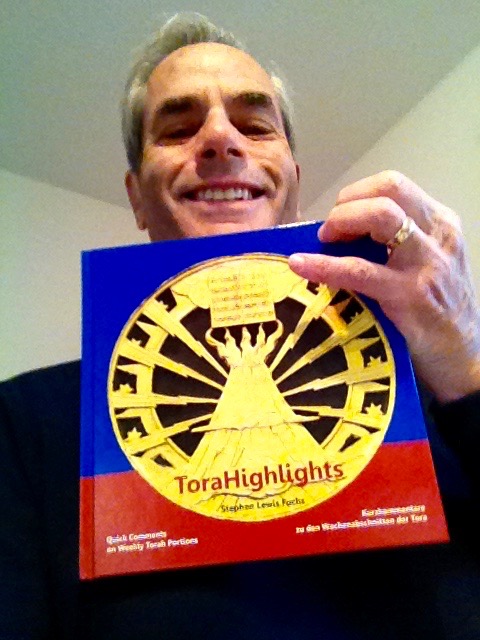
new-book

Whether you prefer the 1843 book or any of the many movie versions made since, there is no question that Charles Dickens’ A Christmas Carol is a classic.

Now, despite the season for which Dickens wrote it, A Christmas Carol is a Yom Kippur story if there ever was one.

As a small child, I lived to hear Ebenezer Scrooge say, “Bah! Humbug!” Only when I was a bit older did I start to appreciate the drama that unfolds after the first commercial.

Scrooge spends a restless night marked by four fateful encounters. The first is with the ghost of his dead business partner Jacob Marley. In life, Marley was Scrooge’s tight-fisted clone. In death, he walks about chained to his account books, wailing in misery.

The frightened Scrooge cries out to Marley: “But you were always a good man of business, Jacob!”

“Business!” answers Marley. “Mankind was my business. The common welfare was my business; charity, mercy, benevolence, forbearance. These were all my business. The dealings of my trade were but a drop of water in the comprehensive ocean of my business!”

The Hassidic rabbi Levi Yitzhak of Berditchev, who died in 1810, two years before Charles Dickens was born, expressed Marley’s admonition to Scrooge in another way. Once, he saw a man hurrying down the street looking neither to the right or the left.

“Why are you hurrying so,” the rabbi inquired?

“I am pursuing my livelihood,” the man answered.

“And how do you know,” the rabbi continued, “that your livelihood is in front of you? Perhaps it is behind you, and you are running away from it.”

Such was Marley’s message to Scrooge:

You are running away from your livelihood, but “I am here tonight to warn you that you have yet a chance and hope of escaping my fate.” As Marley leaves, he promises Scrooge that the spirits of his past, present, and future will visit him.

The ghost of his past allows Scrooge to see the hurt people inflicted on him that turned his life in its miserable direction. He sees himself as a boy in school, sitting alone during the winter recess, in his words, “a solitary child … neglected by his friends.”

Then Scrooge sees himself as a young apprentice to kindly Mr. Fezziwig and remembers, “He has the power to render us happy or unhappy; to make our service light or burdensome; a pleasure or a toil.”

In his dream of the present, Scrooge learns from his nephew, Fred, and his clerk, Bob Cratchitt, that vast riches do not provide happiness, nor does their absence preclude it. In Bob’s ailing son, Tiny Tim, Scrooge sees opportunities to act righteously that he has spurned for so long.

Scrooge’s final lesson allows him to look into the future, to see how people scorn him after he is gone.

Yom Kippur asks us to experience a night like Scrooge’s Christmas Eve. We need to hear and heed the lesson: Humanity is my business…charity, forbearance, mercy, and benevolence. These are all my business. We need to remember those who treat us kindly. We also need to ponder: Will our death cause sadness or occasion relief?

“Spirit,” cried Scrooge, clutching the robe of Christmas Future, “Why show me this if I am past all hope?”

Scrooge, of course, was not past all hope. And neither are we.

In one of his famous stories, the 18th-century Polish preacher, Jacob Krantz, known as the Dubner Maggid, told of a king who owned a precious diamond.

One morning to his horror, the king noted a scratch on one of the facets of the gem. The overwrought monarch sent word around the world offering a great reward to any jeweler who could remove the scratch from the gem, but none of them succeeded.

At last, a local lapidary asked to try. The king’s courtiers scoffed: “What can you do that the world’s greatest jewelers could not?”

“Certainly,” he replied, “I cannot do any worse than they.”

Skillfully, the jeweler used the scratch as a stem around which he etched a beautiful flower. When he finished, the king and all his courtiers agreed that the gem was more beautiful than it had been before.

Like Ebenezer Scrooge, we are flawed diamonds – with the opportunity to etch lives of beauty and meaning around our shortcomings.

Every year, the Yom Kippur Carol urges us to build lives of “charity, mercy, benevolence, and forbearance” around our flaws.

It is not an easy thing to do, but if our efforts are sincere, infinite rewards await us at the end of the day.


Yom Kippur Arrives Tomorrow!

new-book

(An excerpt from my book: ToraHighlights)

The sacred day of Yom Kippur arrives tomorrow evening.

In biblical times the sacred Festival of Yom Kippur featured the ritual of the “scapegoat.” (Leviticus 16)

The high priest selected two goats, one for a sacrifice on the altar and the other to symbolically carry the sins of the Children of Israel away into the wilderness.

As the Torah says: ‘And Aaron shall lay both his hands upon the head of the live goat, and confess over him all the iniquities of the people of Israel … putting them on the head of the goat … and he shall send the goat off into the wilderness. (Leviticus 16:21-22)

Rabbinic literature attests that the person led the goat to a mountain peak and pushed the goat down. “Before it reached halfway down the hill it was dashed to pieces (B. Yoma 67a).”

Our modern sensibilities recoil at the notion that our wrongdoings can—even symbolically—transfer themselves onto an innocent goat whose death in the wilderness atones for our transgressions.

 Today we are responsible for our own atonement. We observe Yom Kippur by—if and only if our health permits—abstaining from food and drink. We then spend the day in serious contemplation of our wrongdoings and in prayer asking God to forgive our sins.

Our tradition insists that before we can expect God to answer our prayers for forgiveness we must first go to those we have wronged in the past year and try to appease them.

My Hebrew teacher in Israel, the late Sarah Rothbard, whom I revered, said: “It is not just a credit to the Jewish people that we invented a day like Yom Kippur. It is a credit to all humanity.”

What a wonderful concept. We humans can examine our actions, repent our wrongdoings and change for the better!

That is precisely the task Jews around the world will focus on for a full 24 plus hours beginning tomorrow evening.


Just Before the New Year Arrives

new-book

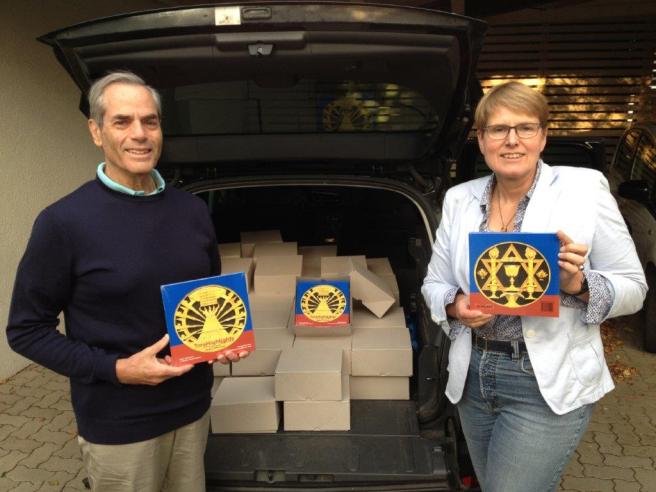
ToraHighlights: On the eve of the New Year translator and CEO of mutual blessing edition, Pastor Ursula Sieg and I welcome with gratitude the first shipment of my new book ToraHighlghts. We pray that the short commentaries it contains on each weekly Torah portion will bring insight and blessings to many people in the NewYear.


In just hours, now, Rosh Hashanah arrives

 For me that is the most important time in the year to remember the teaching of Rabbi Simcha Bunam, an 18th-19th C. Hasidic leader in Poland: Each of us should have two pockets, In each we should carry a different quotation.

When we feel puffed up and full of pride, may we pull from one pocket a note that reads, “I am but dust and ashes!” In the other pocket, when we feel that our efforts futile and have no consequence, let a note read: “For my sake the world was created.”

During the month of Elul we have, hopefully, dedicated our thoughts to examining our actions and thoughts during the past year with the goal of becoming kinder and more caring in the year ahead. If our self-scrutiny is honest we know that there are many times we have fallen short of our own ideals and God’s hopes for us.In those moments it is easy to fall into despair and see ourselves as without merit, or little more than dust and ashes.

At such times it is good to remember that our tradition teaches us that this world is no accident and that our lives are not accidents either. They can have purpose and meaning!

We celebrate Rosh Hashanah as the anniversary of the creation of the world.

God charged us at creation to use our talents to make the world a better place. Few of us will find the cure for cancer or bring about world peace, but that should not stop each of us from dong something. We each can teach a child to read, help an elderly person cross the street, cook and serve a meal at homeless shelter. The possibilities are endless.

But when we become puffed up in the pride of our accomplishments or even in our acts of kindness, it is good to remind ourselves that as Abraham realized when he addressed the Almighty (Genesis 18:27) we are ”but dust and ashes.”

One of life’s must difficult challenges is to find the balance between conceit and despair.

Henry David Thoreau reminded us: “We are double-edged blades, and every time we whet our virtue the return stroke straps our vice.”

I think that it is no accident that, as Bahia ben Asher of Saragossa (13-14th c.) noted, the zodiacal symbol for Tishri and the Jewish New year is usually a balance scale. As we count down the weeks toward Rosh Hashanah, our tradition enjoins us to think of our good and evil deeds as weighing equally on the scale of merit, and that our next act will tip the scale of judgment for good or for ill.

 Think of the power the image of the balance scale can have.

If each of us wakes upon this New Year feeling an urgent need to do a good deed, what an amazingly positive impact our collective actions will have on our families, our communities and our world.

Personally, I pray that God will consider the effort that went into ToraHighlights as a good deed and tip my wavering scale to the side of good and will bless me with a year of  life, health, and meaning.

Amen


A Test for the Nation

As the first presidential debate is about to take place, I want to be clear where I stand on this contest.

slfuchs's avatarFinding Ourselves In The Bible

I do not like Hillary Clinton. I never have. Her Wall Street speeches, the texts of which she won’t reveal, top my list of things about her that I find distasteful. Her business dealings over the years have more than raised eyebrows.

But(and this but is huge)

Her debits pale compared to those of Donald Trump. For months we have seen this bombastic, self-centered misogynist pandering to the fears of America’s working class.

But his record speaks for itself. Time and time again he has exploited people—especially workers– ruthlessly for his own gain.

Sadly for me this election is a choice between the lesser of two evils.

That said it is a no brainer.

Ms Clinton’s background, and her experience as first lady, Senator, and Secretary of State have groomed her for the office she has hoped all her life to attain.

Yes, she is willing to say…

View original post 390 more words

A Dream Come True!

russian-book-photo

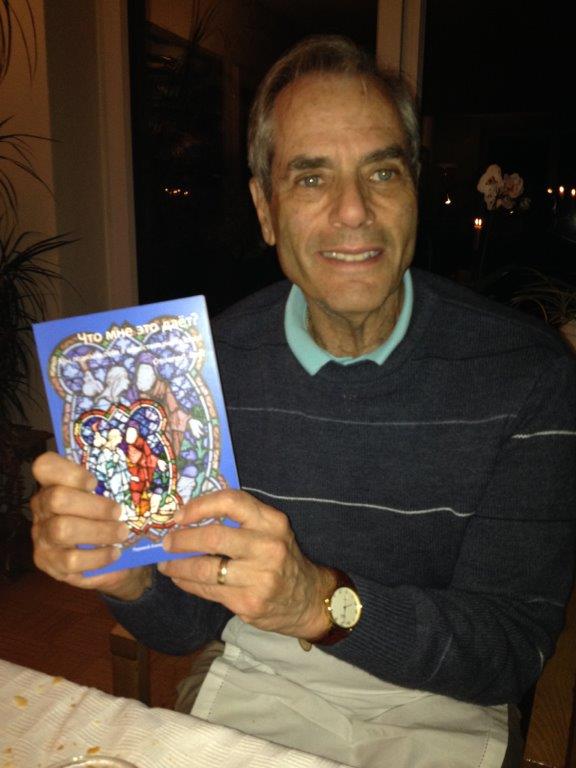
Since I first came to Germany in 2011 I realized that most of the Jews living here today are native Russian speakers. I am thrilled, therefore to announce that my book, What’s in It for Me? Finding Ourselves in Biblical Narratives has just come out in Russian.

The book is due to the vision of Pastor Ursula Sieg, President and CEO of Mutual Blessing Edition,  the company she founded a year ago to facilitate the publication of the German translation of my book.

I am overjoyed that Russian speakers will have access to this concise interpretive non-Orthodox perspective on the narratives in the Torah. I pray that this volume will help Russian speakers appreciate the ways biblical stories can affect our lives for the better.

The translation into Russian was prepared by Alexandra Oks, and I am most grateful to her. I also gratefully thank Dr. Serafine Christine Kratzke for her skillful work on the layout of the book.

It will be a while before all of the logistics involved in establishing a system for distribution of the book can be worked out, but for now I am very happy that we have reached this milestone.

My colleagues who work in and for the Russian communities will be the first to receive copies. I hope they will be of help in opening doors to enable the book to reach more people who might benefit from it.