Moses’ Finest Hour

Torah Commentary: Shelach Lecha

In the second year of their journey from Egypt, God instructs Moses to send twelve scouts, one from each of the twelve Israelite tribes, to spy on the Promised Land (Numbers 13 ff). Moses requests that the spies bring back a detailed report of the land they plan to invade and conquer.

The spies return and tell Moses, essentially, there is good news and bad news.

The good news is that the land is wonderful. It is rich and fertile; it “flows with milk and honey” (Numbers 13:27). To prove their point, the spies return with a cluster of grapes so rich and lush that it took two men to bear the pole to which the grapes were attached (Numbers 13:23). To this day, two men carrying a huge cluster of grapes is the official seal of Israel’s Ministry of tourism.

The bad news, according to ten of the twelve scouts, is that the land is unconquerable. The people are “giants” and we will seem to them “like grasshoppers” (Numbers 14:33).

Two of the scouts, Joshua and Caleb, disagree contending that God has promised us this land, and we need to have the faith and courage to do our part and carry out God’s plan.

Nevertheless, the naysayers rail against Moses for ‘rescuing’ them from Egypt only to die out in the wilderness. “It would be better for us to go back to Egypt. Let us head back to Egypt (Numbers 14:3-4).”

As when the Israelites made the golden calf, God is angry enough at the people’s lack of faith to destroy them.

But once again, Moses stands between the people and God’s anger.

Using the same argument as with the golden calf, Moses, says: “When the Egyptians, from whose midst You brought up this people in Your might, hear the news, they will tell it to the inhabitants of that land…If then You slay this people to a man the nations who have heard Your fame will say, It must be because the Lord was powerless to bring that people into the land He had promised them on oath that He slaughtered them in the wilderness” (Numbers 14:13-16).

Moses’ appeal to God’s concern for the divine reputation is an example of biblical humor that misleads some into labeling God as a vain and self-absorbed deity. Au contraire. God could not care less what either the Egyptians or other nations think. The intent is to demonstrate the sacred partnership between God and Moses.

Those times when he restrains God’s wrath are Moses’ finest hours.

Even though God promises to glorify Moses with a new and improved nation, Moses will not have it. This is Your people, Moses insists, whom You freed from the land of Egypt. You cannot destroy them.

The crucial message of this incident⎯as with the golden calf–is that Moses and God are partners. When God seemed ready to give up on the people, Moses offered encouragement, perspective and hope. When Moses runs out of faith, God strengthens him.

I hope that it is that way with us. When life is most difficult, I hope we hear a voice within⎯I call it God⎯that urges us to continue. It is a voice imploring us to believe in ourselves and to believe that our lives have purpose.

Like our Eternal Covenant I believe the relationship is reciprocal. Through our god-like acts of compassion and sharing, we inspire God’s compassion just as Moses had done.
For My German Readers: Mach nicht zu viel!

Kurzkommentar zum Wochenabschnitt B’ha-ah-lo-techa (Numeri 8-12)

Diesmal ist es keine Überraschung, dass die Kinder Israels sich beschweren. Jetzt ist es die Wüstenküche, die nicht nach ihrem Geschmack ist. Sie verlangen, dass Mose ihnen Fleisch gibt.

Moses gerät aus der Fassung. Es wird ihm zu viel und in seinem Schmerz schreit er zu Gott: “Soll ich dieses Volk an meiner Brust tragen wie ein stillender Vater (Wie ich dieses Bild liebe!) Säuglinge trägt?” (Numeri 11:12)

Obwohl der Ewig Eine ebenfalls sehr böse ist über das Volk, sagt Gott Mose, er solle sich entspannen, weil er zu viel auf sich nimmt.

Dann instruiert Gott Mose er solle 70 Älteste bestimmen, die ihn unterstützen, damit er nicht in der Wüste ein Burnout erleidet. (Numeri 11,16)

Interessanter Weise lesen wir vor diesem Vorfall von einem Gespräch, in dem Mose seinen Schwiegervater (Jethro in Exodus, nun Reuel genannt. Offensichtlich haben wir es also mit zwei verschiedenen literarischen Quellen zu tun.) bittet bei dem Volk zu bleiben, um ihnen – als ihr Auge – mit seiner Ortskenntnis zu helfen. Reuel sagt nein. Er muss zu seinem eigenen Volk in sein eigenes Land zurückkehren (Numeri 10:29-32). In Exodus war es Jethro, der Mose den gleichen Rat gab, den Gott ihm im aktuellen Wochenabschnitt gibt (Exodus 18,14-26).

Egal welche Quelle, der Rat ist wichtig.

Der Talmud macht es kurz und bündig: “Wenn du zu viel machst, machst du am Ende gar nichts.” (B. Sukkah 5b) Oft, wenn wir an Predige gewinnen, besteht die Gefahr der Selbstüberschätzung.

Und schon muss Gott Mose, die größte und wichtigste Person der Tora (Deuteronomium 34,10), erinnern, dass er nicht zu viel auf sich nehmen soll. Wenn das so ist, sollten wir diese Botschaft nicht auch für uns selbst beherzigen?

Und schon muss Gott Mose, die größte und wichtigste Person der Tora (Deuteronomium 34,10), erinnern, dass er nicht zu viel auf sich nehmen soll. Wenn das so ist, sollten wir diese Botschaft nicht auch für uns selbst beherzigen?

Translation: Pastor Ursula Sieg

Do Not Try to Do Too Much! Quick comment: Parashat B’ha-ah-lo-techa (Numbers 8-12)

By now it is no surprise that the children of Israel are complaining. This time the desert cuisine of manna is not to their liking, and they demand that Moses give them meat.

Moses loses it! He is overwhelmed, and in his anguish he cries out to God, “Shall I carry these people in my bosom as a nursing father (how I love that image!) carries a suckling child?“ (Numbers 11:12

But even though the Eternal One is also very angry with the people, God tells Moses to relax because he is taking too much on himself.

Then God instructs Moses to appoint seventy elders to assist him so that he will not suffer burnout in the desert. (Numbers 11:16)

Interestingly, before this incident we read a conversation in which Moses asks his father-in-law (Jethro in Exodus now called Reuel, so we are obviously dealing with two different literary traditions) to remain with the people to act as their eyes in the desert. Reuel says no. He must go back to his own people in his own land (Numbers 10:29-32). In Exodus it was Jethro who gave Moses the same counsel that God gives him in this week’s portion. (Exodus 18:14-26)

Whatever the source, the advice is crucial.

 The Talmud puts it succinctly: “If you try to do too much, you end up doing nothing.” (B. Sukkah 5b)

Often, as we grow in stature we allow our sense of self-importance to grow beyond legitimate bounds.

 And yet God had to remind Moses, of whom the Torah teaches we shall never see his like for greatness again (Deuteronomy 34:10), that he should not take too much on himself! If so, should we not heed the message ourselves?

Ein alterText wirft eine aktuelle Frage auf

Kurzkommentar zu Parascha Naso (Numeri 4-7)

Der Toraabschnitt dieser Woche spricht die an, die sich freiwillig das Nasiräer-Gelübde auferlegt haben, üblicherweise für eine begrenzte Zeit.

Der Text scheint weit entfernt von unserer gegenwärtigen Lebenssituation, aber er wirft eine auch heute wichtige Frage auf.

Die, die das Nasiräer-Gelübde auf sich nahmen, durften sich auf keinem Fall einem Toten nähern, nicht mal einen nahen Angehörigen betrauern. Sie durften ihr Haar nicht schneiden oder den Bart rasieren, Wein oder starke Getränke durften sie nicht mittrinken.

 Die Tora sagt ganz klar, dass der Sinn des Nasiräer-Gelübdes ist, die Person “Heilig für den -EwigEinen” zu machen (Numeri 6,8).

Wir wundern uns zurecht. Wie kann das Auferlegen dieser strengen Verbote eine Person heiliger für Gott machen, als sie vorher war?

Ich finde keine Antwort, aber das macht nichts.

Die wichtigere Frage ist: Was können wir heute tun, selbst mehr “heilig für den EwigEinen” zu werden? Was können wir tun um uns selbst zu inspirieren unsere Bündnis-Verpflichtungen als Nachkommen Abrahams und Sarahs zu erfüllen: “Sei ein Segen !” (Genesis 12,2), “mach dir Gottes Weisungen zueigne und sei ihrer würdig” (Genesis 17,1) und unser Bestes zu tun und unsere Kinder und Enkel lehren ihr Bestes zu tun, um die Welt mit “Tzedakah (Gerechtigkeit) und Mishpat (Rechtschaffenheit) zu füllen (Genesis 18,19)!”

Sicherlich haben sich die Mittel der Selbstinspiration durch die Jahrtausende geändert, aber das Ziel bleibt das gleiche.

Wie versuchen dem Bild Gottes, nach dem wir geschaffen sind, näher zu kommen und unsere Begabungen, mit denen Gott uns gesegnet hat, einzusetzen für eine gerechtere, fürsorgendere und mitfühlendere Gemeinschaft aller Kinder Gottes.

Translation: Pastor Ursula Sieg

An Ancient Text Raises a Vital Question for Today

Quick Commentary: Parashat Naso (Numbers 4-7)

This week’s Torah portion speaks of those who voluntarily take on the vow of the Nazirite, usually for a limited amount of time. This text seems far-removed from our contemporary concerns, but it raises a vital question for us today.

Those who took the Nazirite vow could not go near a dead body for any reason, even to mourn a close relative. They could not cut their hair or trim their beards, nor could they partake of wine or strong drink.

The Torah makes clear that the purpose of the Nazirite vow was to make one “Holy to the Eternal One. (Numbers 6:8).”

We rightly wonder. How could imposing these strange restrictions upon oneself make a person more holy to God than he or she was before?

The answer eludes me, but it does not matter.

The more important question is: What can we do today to make ourselves more “Holy to the Eternal One?” What can we do to inspire ourselves to more fully embrace our covenantal obligations as descendants of Abraham and Sarah to: “Be a blessing (Genesis 12:2),” to embrace God’s teachings and be worthy of them (Genesis 17:1)” and to do our best and teach our children and grandchildren to do their best to fill the world with “Tzedakah (righteousness) and Mishpat (justice) (Genesis 18:19)?”

Certainly, the acts we perform to inspire ourselves have changed over the millennia, but the goal remains the same.

We seek to more closely live up to the Divine Image in which we were created and to use the talents with which God has blessed us to make a more just, caring and compassionate society for all of God’s children!

Shavuot: A Wonderful Example of Reform Jewish Thinking!

One of the great examples of Reform Jewish thinking, some 2000 years before there was anything called Reform Judaism, regards the Festival of Shavuot.

In the Torah, Shavuot is strictly an agricultural holiday, a celebration of both the first summer fruits and the barley harvest (Leviticus 23:15-22). Our ingenious Rabbinic Sages reformed (and I use that word purposely) the festival into the anniversary of our biblical ancestors receiving the Torah at Mount Sinai. We cannot be sure of exactly how it happened but I imagine a scenario much like this:

A group of concerned rabbis were discussing the state of Jewish life. One Sage mused, “You know, Shavuot just doesn’t attract the great crowds to celebrate in Jerusalem that it once did.”

A second Rabbi answered: “That’s true, but it’s understandable. Times have changed!”

A third participant: “You are absolutely right! When we were primarily an agrarian society, first fruits and the barley harvest were compelling reasons to celebrate. Now, that we have become more urban, those occasions don’t mean as much to many people.”

First Sage: “What can we do?”

A fourth participant spoke up: “I’ve got it! If you look at the Torah, Shavuot comes 50 days after the first day of Pesach. That’s just about the same amount of time that it took our ancestors to travel to Mount Sinai after they left Egypt! Even though the Torah does not make the connection explicitly we can make the connection. From now on we can celebrate Shavuot—in addition to its biblical significance–as a joyous celebration of when we received Torah at Mount Sinai”.

A fifth Sage asks: “Can we do that?”

The fourth responds: “Not only can we, we must!! If we want our precious Jewish heritage to endure, we must be skilled interpreters of biblical texts so that they speak meaningfully to the present and future realities of our people.”

In this way, I can easily imagine, the rabbis of the Talmudic period took a fading agricultural festival and gave it a historical underpinning and new life for future generations. In similar fashion, our early Reform leaders made Shavuot the time when ninth, tenth, or—in some communities–twelfth grade students celebrate Confirmation.

The example of what our ancient Sages did with Shavuot must continue to inspire our thinking as Reform Jews today. If we want our precious heritage to remain vibrant and relevant, we must always be eager to embrace opportunities to make our traditions and celebrations speak more meaningfully to our children and grandchildren!

When we do, let us rejoice that the process of continually “reforming” Judaism is wholly consistent–and not at odds–with the process by which our Rabbinic Sages enabled Judaism to speak to the realities of their time and place.

My First Hebrew Teacher

Quick Comment: Bemidbar (Numbers 1-3)

 In parashat Bemidbar (Numbers 3:1-7) God instructed the Levites to care scrupulously for the sacred vessels of our ancient tabernacle in our people’s journey to the Promised Land. Today, our sacred vessels are the children we teach, and how we do it can change their lives.

On the first day of class Shulamit Steinlight, my first Hebrew teacher, who died in 2010 at the age of 95, asked us our Hebrew names. I had no clue.

“Ask your parents,” Mrs. Steinlight responded. “And if they don’t know, ask your grandparents, and tell me next class.”

When I asked, my parents informed me that my Hebrew Name was “Siskin Labe.”

Mrs. Steinlight, who had lived for some time in Israel, exclaimed with a slight wrinkling of her nose, “That’s Yiddish!” You need a Hebrew name. It will be אריה . And אריה (Aryeh) it has been from that day to this.

Mrs. Steinlight gave me much more than my Hebrew name.

We were a rowdy bunch, but Mrs. Steinlight never lost her temper and never raised her voice. She made it clear, though, that she was there to teach, and we were there to learn. But I was not interested.

Mrs. Steinlight made me feel loved anyway.

Eventually, Hebrew and Jewish learning became vital to me, and I realize that Mrs. Steinlight was one of the reasons.

A couple of years before she died I located her and called her on the phone to tell her what she meant to me. Although she was thrilled almost to tears by my call, I sensed that she did not remember me. But no matter! I will always remember that she treated me like a sacred vessel entrusted to her care. And I am so glad I could tell her.

For My German Readers: Freiheit – ein schwer zu erreichendes Ziel

Attachment-1

Kurzkommentar zum Tora-Abschnitt Behar (Levitikus 25, 1 . 26.2)

Wie verrückt suchte ich im Internet die Worte von Yitzhak Rabin, eingemeißelt in meine Erinnerung, aber offensichtlich vergessen von Google ob seinen bedeutenderen Reden.

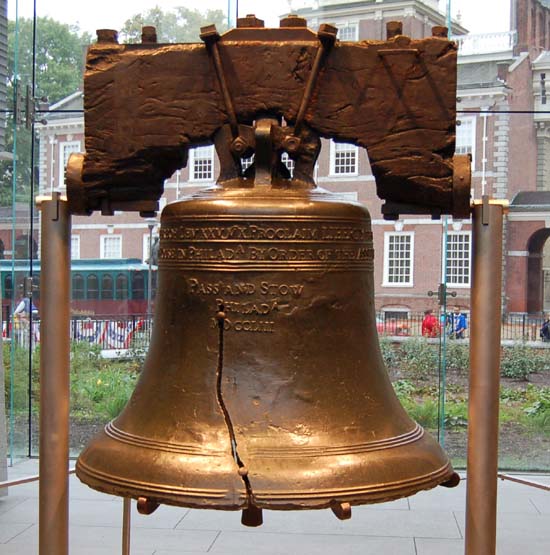
Es war im Juli 1974. Rabin sprach vor dem Kongress und beschrieb wortreich, wie er als Kind die Worte auf der Liberty Bell in ihrem Hebräischen Wortlaut lernte: “U `kratem dror ba-aretz L`chol yoshveha – Proclaim liberty throughout the land to all of its inhabitants (Levitikus 25,10)   – Verkündet Freiheit allen Bewohnern des Landes!”

Rabin zeigte auf, dass diese zentrale Grundlage der Demokratien

von Amerika und Israel aus der Tora-Lesung dieser Woche stammt.

Leicht gesagt, aber schwer umzusetzen

Wie jüngste Ereignisse von Ferguson bis Baltimore in den USA und Demonstrationen in Tel Aviv und Jerusalem in Israel belegen, bleiben sowohl die 238 Jahre alte USA wie das 67 Jahre alte Israel hinter diesem Ziel zurück. Obwohl keines der beiden Länder seine hehren Ziele erreicht hat, versäumt keines, seine Ideale hoch zu halten. Es ist leicht von einer gerechten, fürsorglichen und mitfühlenden Gesellschaft zu reden, aber schwer sie zu erreichen. Wie leicht kann man Verzweiflung und Trauer nachgeben, wenn wir uns in der Welt umsehen. Viele tun es. Aber ist es nicht in jedem Fall besser, etwas zu tun, wie wenig auch immer, um die Welt auf den Tag zu zubewegen, an dem es heißen wird: “Sie sollen nicht verletzten noch zerstören auf meinem Heiligen Berg” (Jesaija 11,9).

Wir alle müssen tun, was wir können

Wir mögen nicht Krebskranke heilen, aber wir können Hungernden zu essen geben. Wir werden nicht den Weltfrieden herstellen, aber wir können einem Kind das Lesen beibringen. Möglichkeiten gibt es zuhauf. Wenn wir die Kerzen anzünden um den Schabbat des Friedens und der Freude in unser Leben einzuladen, lasst uns darüber nachdenken, wie wir eine Kerze anzünden können, die Frieden und Freude in das Leben anderer bringt.

Translation: Pastor Ursula Sieg

Liberty for all: An Elusive Goal  Quick Comment: Parashat Behar (Leviticus 25:1-26:2)

Attachment-1

In vain I searched the  Internet for the words from Yitzhak Rabin seared into my memory but apparently forgotten by Google among his more famous speeches.

It was in July of 1974 when during his first term as Prime Minister Rabin addressed a joint session of congress and eloquently described learning the words on the Liberty Bell in their original Hebrew as a small child: “U’kratem dror ba-aretz l’chol yoshveha – Proclaim liberty throughout the land to all of its inhabitants (Leviticus 25: 10).”

Rabin pointed out that this cardinal foundation of both American and Israeli democracy comes form this week’s Torah portion.

 As recent events from Ferguson to Baltimore in the USA and the demonstrations in Tel Aviv and Jerusalem in Israel attest, the United States at age 238 and Israel at age 67 both fall far short of that biblical goal.

Though neither country has yet achieved its lofty ideals, neither fails to hold its ideals aloft.

A just, caring and compassionate society is easy to articulate but difficult to achieve.

It is easy to give in to despair and anguish when we look at the world around us. Many do.

But isn’t it a better choice for each of us to do something—however small–to move the world closer to the day when, “They shall not hurt or destroy in all My holy mountain (Isaiah 11:9).”

We must do what we can

We may not cure cancer but we can give food to the hungry. We may not make peace in the world but we help a child learn to read. Possibilities abound.

As we light the candles to welcome a Shabbat of peace and joy into our lives, let us think of how we might light a candle to bring peace and joy into the lives of others.


For my German Readers: Warum Wurde Rösch Hashanah So Bedeutend?

Kurz-Kommentar zum Tora-Abschnitt Emor (Levitikus 21-24)

Wo in der Tora Heilige Tage und Feste aufgeführt sind (Levitikus 23), gibt es nur zwei Sätze zu Rosch Hashanah. Warum bekommt ein solch wichtiger Anlass im jüdischen Leben so wenig Raum?

Es ist anzunehmen, dass zu Zeiten, als man jeden Buchstaben in Stein meißelte oder auf Pergament schrieb, der Platz, den ein Thema bekam, ein Hinweis auf seine Bedeutung war. Offensichtlich wurde also Rosch Hashanah wenig beachtet.

Aber heute? Wow! Architekten müssen die Synagogen so bauen, dass sie für die Menschenmassen an Rosch Hashanah (und Jom Kippur) vergrößert werden können.

Über das Jahr tun wir Rabbiner alles, die Leute in die Synagoge zu locken. Aber an Rosch Hashanah drucken viele Gemeinden Eintrittskarten, um Nicht-Mitglieder raus zu halten.

Zwei Historische Ereignisse

Unsere Liturgie gibt Hinweise, warum Rosch Hashanah so wichtig wurde. Unser tägliches Gebet und der Schabbat Gottesdienst erwähnen nur zwei historische Ereignisse: Die Erschaffung der Welt und der Auszug aus Ägypten Der Kiddusch (der Schabbat-Segen über dem Wein) erwähnt auch nur die Schöpfung und den Exodus.

Nun feiert das Pessach-Fest, an dem mehr Juden teilnehmen als an jedem andern Fest durch das Jahr, ausführlich den Exodus. Wir brauchten aber auch eine Gelegenheit, die Ideale der großartigen Geschichte der Schöpfung zu feiern. Die Geschichte erzählt uns nichts über das “Wie” der Schöpfung, aber viel über das “Warum”.

Gott schuf die Welt mit Absicht und Sinn und bestimmt uns Menschen dazu für die Welt verantwortlich zu sein. Gott gab uns beeindruckende Macht. Wir sind die einzigen Geschöpfe, die Gehirnoperationen durchführen können, aber auch die einzigen, die Bomben bauen können und Kugeln herstellen, um zu verletzten und zu töten.

Unsere Weisen verstanden sehr genau, dass wir ein Fest brauchen, das uns daran erinnert unsere

Macht vorsichtig zu gebrauchten. Darum wurde Rosch Hashanah so bedeutend, wie es jetzt ist.

Translation: Pastor Ursula Sieg