Another Human Sacrifice


Yes, another human sacrifice, a practice God and Abraham taught the world to abhor in Genesis 22, and we still don’t get it.
And yet some continue to see the story as other than a warning against human sacrifice. Chapter VI of “What’s in It for Me? Finding Ourselves in Biblical Narratives makes the case more fully, and I urge you to read it. I am happy to send anyone who messages or emails me at sl.fuchs@comcast.net the chapter.
Still, some will continue to say, “Abraham failed the test,” or “How could God have asked such a horrible thing of Abraham.” And just as bad, some of us will continue to support football by watching this carnage or worse allowing our children to play with the same enthusiasm that those ancient Rome watched the gladiators.
Make no mistake by watching football we are supporting a spectacle that leads too often to pain filled, dementia plagued, and shortened lives of those who play.

Other Women in My Life

Although I am not 100% decided, I will probably vote for Hillary Clinton in the Connecticut Democratic Presidential Primary.

If I do, it will only be because I dislike her as a candidate less than I dislike Bernie Sanders.

Because I have written that I am not eager to see Ms Clinton become President of the United States, some have accused me of being sexist.

I would not like her any better if she were a man.

If anything, I would favor her because she is a woman. During a trip to Israel in 1984, I’d learned that the late Geraldine Ferraro would be running for Vice-President. I considered it a cause for celebration.

Looking back over my career as a rabbi, I believe I have done my part to advance the status of women as Jewish clergy.  I am proud to have played a pivotal role in bringing:

  • The first female rabbi to Columbia, Maryland
  • The first female Cantor to Columbia, Maryland
  • The first female rabbi to Nashville, Tennessee
  • The first female Cantor to West Hartford, Connecticut
  • The first lesbian rabbi to West Hartford, Connecticut

I wonder if any of those calling me the “S” word can make such claims. All of those initiatives met resistance, and I did not make these hires unilaterally. But because I was the Senior Rabbi of the congregation in each case, none would have occurred had I not pushed for them. In each case I’m glad I did.

Because of my track record, I bridle when people say that I don’t like Hillary Clinton because she is a woman. My wife says I am jealous that nobody will pay me $250,000 to give a 45-minute speech to Wall Street bigwigs. She is right.

But like Mr. Sanders, I wonder what great wisdom Ms Clinton could impart to warrant such munificent compensation.

Yes, I believe those fees are unseemly to say the least, but I am equally disturbed by Whitewater and Ms. Clinton’s quick turn of profit in the commodities market.

There are other things about Ms Clinton that displease me, but the time has come for me to overlook them. She is not only my likely preferred Democratic candidate, but she is the one with the far better chance of defeating Mr. Trump in the general election.

That to me is job one.

As for the fact that Ms Clinton is a woman … that is the best thing she has going for her.


Looking Backward with Gratitude; Looking Forward with Hope: Thoughts on Reaching Seventy

https://youtu.be/2R1jiVcIGcg

Just as ‘”Yankee Doodle Dandy” attributes his priorities to the fact that he was born on the Fourth of July, I attribute mine to the fact that I was born on Shabbat Zachor, the Shabbat before Purim.

It has been exactly forty years since I first began reflecting on my life in a sermon. Forty years ago I treated my congregation to an address entitled, “From the Top of the Hill Looking Down, Thoughts on Reaching Thirty.“

On my 30th birthday, March 16, 1976, I was among a group of Baltimore area rabbis gathered in an upscale Spanish restaurant to celebrate the upcoming retirement of Rabbi Abraham Shaw who had spent 40 years as rabbi of one congregation, Oheb Shalom in Baltimore.

As colleagues paid tribute to Rabbi Shaw, I found myself imagining that the gathering was really in honor of my 30th birthday.

I found myself wondering, “What would I want people to say about me when they reflect on my life as a rabbi?”

As I looked around the group I saw some wonderful role models. But I also saw a “scholar rabbi” who spent most of his time studying and writing learned articles read only by specialists. His congregation basked in his reputation as “a brilliant man.”I saw one I considered “a glad hander rabbi,” who always had a smile and a slap on the back for everyone. I saw a “businessman” rabbi who was a Cracker Jack fundraiser, and a great administrator. I knew I did not want to be like them.

I wanted, and I still want to be remembered as a rabbi who cared deeply about his congregants’ lives and whose love of Torah enabled him to help others find greater meaning in its stories.

 I never had the privilege or the burden of working with a senior colleague. Surely I could have benefitted from the experience of a wise and seasoned Senior Rabbi. At the same time I am glad that from the outset of my career, I had the opportunity to make my own decisions and my own mistakes.

I have had the privilege of working with younger colleagues in each of the three congregations I served. Some of these relationships were wonderfully harmonious and successful. Some, I acknowledge, were not.

I take a good measure—though not all of—the responsibility for those partnerships that were less than mutually enriching. There were times when I should have stepped back instead of stepping in, and there were times when I should have listened more and talked less.

Certainly, I have made other mistakes and not—as Frank Sinatra sang—“too few to mention.” At times I have been too focused on what people think of me and at times insufficiently sensitive as to what the impact of my words and actions on others would be. I own these shortcomings and still try to work on them.

I am also very intense, and some find that intensity off putting. If I could live my life over again, I would dial it back a bit.

But, I would emphasize, that very intensity also drove me and continues to drive me to do things as well as I possibly can.

I can honestly say that I have never “phoned in” a baby naming, Bar or Bat Mitzvah, a wedding a lesson, a sermon or a funeral.

Yes, I am proud that in some ways the life course I envisioned for myself in that Baltimore restaurant eventuated as I hoped.

But when I was thirty, I had no idea how important the lessons of the Purim story would become to me.

I have always loved Purim. The first real responsibility I took on in my high school youth group—long before I considered becoming a rabbi–was to chair the Purim Carnival at our Synagogue.

Our work in Germany for the past two years ties directly to Purim and to the special Torah reading for this Shabbat from Deuteronomy (25:17-19) “Remember … Do not forget!”

The first time I read these words in my first congregation in Columbia, Maryland, Father George Cora, of blessed memory, head of the local Catholic Church, was among the worshippers. Afterward he challenged me, “Why do you feel commanded to remember the past? Isn’t it time to move on and focus on the future?”

I had not yet learned George Santayana’s famous quotation, ““Those who fail to learn from history are doomed to repeat it”.

Even so, I responded then as I do now. We must learn from the lessons of the past in order to shape a better future.

Fast forward forty years, and the answer I gave to Father Cora resembles the answer I give when people ask why we spent ten weeks these past two years in Germany and why we plan to return this coming fall:

We cannot undo the past, but the future is ours to shape!

I also love the Purim story for what it teaches us about our destiny in life.

In the Purim story Esther’s heroism averts the tragedy Haman planned.

But she was reluctant to go to the King. When he heard that, Mordechai’s message to her was clear: You must! Who knows, he “texted her” through their go between, Hatach, if you did not get to be queen just for this opportunity that only you have to make a difference.

And so she went

I believe each of us has these moments in our lives.

The first one I remember was when I was fifteen and walking to our synagogue’s Chanukah celebration.

I stopped in to buy my girlfriend a gift when a girl about ten years old entered the store. She was literally dressed in rags and reminded me of the Little Match Girl of Hans Christian Anderson’s famous story.

“I want to buy a Christmas present for my Mother,” the girl told the storekeeper, “but I don’t have much money.

The man showed her a few inexpensive items, and when she saw one she liked, she asked how much it was”

The girl frowned when he told her the price, and she realized after counting her money, that what she had was not enough.

To this day I believe the Eternal One put me in that store at that moment so that I could make up the difference between the amount of money the little girl had and the cost of the gift.

I believe these moments when we like Esther have a chance to make a difference come to all of us. But we must be on the alert for them. Or they can quickly pass us by.

The rabbis say that a burning bush was an odd way for God to manifest the Divine Presence to Moses.

After all burning bushes are not so unusual in the desert. But only because Moses was on the alert did he realize the bush was not consumed and contained a life changing message for him.

That is why Vickie and I went to Germany.

 We had opportunities to:

  • Teach German high school students that they are not responsible for what happened, but only through learning about it can they prevent such things in the future.
  • Conduct holy day services in synagogues that would have gone without a rabbi.
  • Share the approach to Torah in my book, What’s in It for Me? Finding Ourselves in Biblical Narratives with audiences that had always felt they had to choose either to take the Bible literally or dismiss its stories as quaint fairy tales.
  • Speak in more than fifteen churches where a rabbi had never spoken before and where many of the worshippers had never seen a living, breathing Jew before.
  • Speak at three Kristallnacht commemoratives in Leipzig, the city where my father, z’l, was arrested on that fateful night.
  • Conduct the first Jewish service in the city of Friedrichsstadt since before World War II.
  • Offer Seminars and lectures at the Abraham Geiger College and the University of Hamburg.

In the scheme of things these are not great accomplishments. We did not cure cancer or make peace in the Middle East. But we made a difference.

I am proud that we have taken advantage of these opportunities, and I hope we can always be on the alert for moments when destiny calls to us with the message of the Purim story:

Who knows if you are not where you are just for the opportunity to make small difference for good in peoples’ lives?


.

An Extra Measure of Joy

small birthday pho

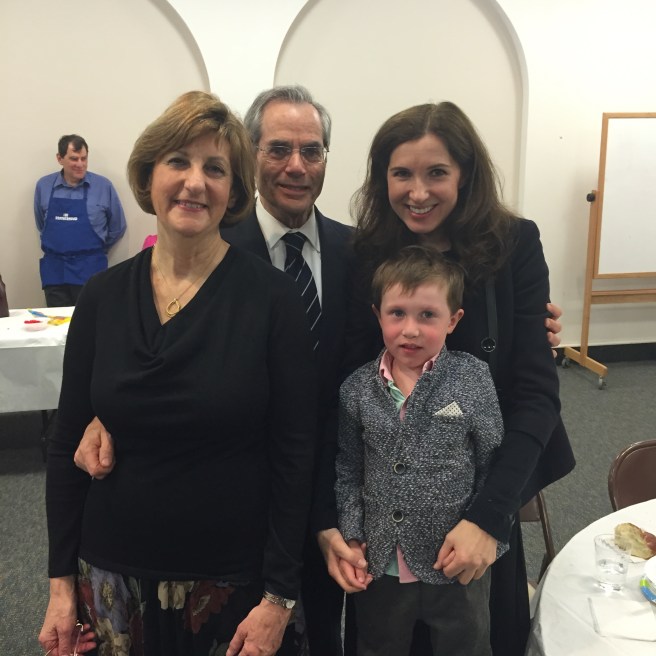
Above: Vickie and I with Maria (Masha) Sheinin and her son Mark

The Shabbat Eve service at which I celebrated my 70th birthday was a delight. There was a lovely crowd, and they really seemed to appreciate (if I say so myself) my sermon. They even liked the original songs I contributed to the service.

The Oneg Shabbat reception that Vickie and I sponsored after the service was lovely. Our dear friend Yvonne Goldstein, who lives in Tucson, lovingly sent ten pounds of Rugelach, which the congregation inhaled, from her favorite bakery in San Diego.

To top off the evening Maria (“Masha”) Sheinin from Moscow and her son Mark drove up  from Manhattan to be there.

I did not see Maria during the service, but when it came time to invite the youngsters up to bless the Challah at the end of the service, Mark shyly approached the bema. I thought to myself that little boy looks a lot like Masha’s son Mark. It had been quite some time since I had seen him, and I thought, “I’ll email Masha and tell her that there was a kid there who closely resembles her son.”

When I saw that it actually was Mark and that Masha was there too, I was deeply touched. I had no clue that she would come or even seriously consider coming.

“Masha” is an international banker who lives part of the year in Russia and part of the year in New York City. She was President of the Reform Movement in the Former Soviet Union, and we worked together when I served as President of the World Union for Progressive Judaism.

The Beauty of Progressive Judaism

Four and a half years ago when she was (very) pregnant with Mark, Masha made a wonderful presentation at a young professionals event in which she articulated so beautifully that Progressive Judaism attracts her because it not only allows but requires us to filter ancient traditions through our own intellect and spiritual consciences. Her intelligence, sincerity and charisma made an indelible impression on those who attended.

When Mark was born in New York City not long after that event, Vickie and I visited them in Mt Sinai Hospital. I was honored when he was eight days old to attend his brit milah ceremony entering him into the Covenant of Abraham and the Jewish people.

What a Surprise!

Still I had no expectation that Masha with Mark in tow and now pregnant with her second child would drive all the way to West Hartford and back again to Manhattan at ten o’clock at night. Vickie and I invited her to stay overnight in our home, but she needed to get back to New York because her parents were flying in from Moscow the next morning.

Yes, my 70th birthday service was very special, but the surprise appearance of Masha and Mark gave the occasion an extra measure of joy.


A Purim Message from Bad Segeberg in 1936

slfuchs's avatarFinding Ourselves In The Bible

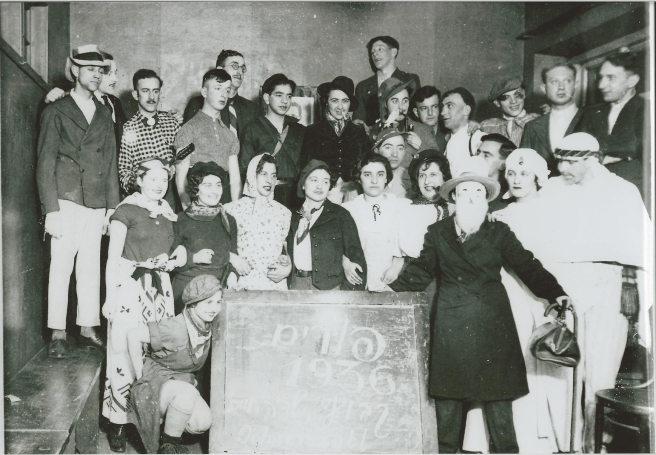
Purim in Bad Segeberg, 1936.pngIn little more than a month, Purim will be here again. In addition to masks, groggers, and fun-filled Purim spiels, I hope part of our preparation focuses on the vital messages this festival and the Book of Esther, the text that underlies it, send to us today
The faces in the photo that hangs in the new synagogue in Bad Segeberg haunt me. They seared themselves into my brain the first time I saw it, and they do not let go.

What were these 26 souls thinking when—in hiding–they celebrated Purim in 1936? Their eyes and their smiles betray fear as well as their resolve to celebrate the festival with joy.

There are those who demean Purim and the basis for the festival, the Book of Esther. They say:

“It is the only book in the Tanach that does not mention God!””

“The story reads a cartoon melo-drama. It is…

View original post 568 more words

What I Learn from Elie Wiesel about Donald Trump

In the three months since I originally posted this essay, the stakes have gotten much higher.

slfuchs's avatarFinding Ourselves In The Bible

Donald Trump never really attracted my attention until recent months. But I have paid close attention to Elie Wiesel for almost half a century.

It is 47 years since I first saw and heard Elie Wiesel in 1968. He was then a 40 year-old activist on behalf of Soviet Jewry.

I had just finished my undergraduate thesis on The Jews of the Soviet Union Since the End of World War II. Wiesel’s book, The Jews of Silence was a primary source of my research.

Fifteen years later in Baltimore, I gave the invocation at an event where I again heard Wiesel speak. I treasure the fact that he complimented me on my presentation, and he said something that evening that I have remembered ever since.

“It says in Pirke Avot (3:1) “Keep in mind three things: from whence you came, to where you are going, and before whom we must…

View original post 418 more words

Arkansas Memories: My Student Pulpit

The News that the Meir Chayim Temple, in McGehee, AR, will officially close this summer saddens me. In tribute to this congregation and what my experience there means to me, I am reposting this memoir of my time there.
I write these words from Dothan, AL, I am here as Scholar in residence at Temple Emanu-El at the gracious invitation of Rabbi Lynne Downey Goldsmith, who commented so very generously when I first posted this essay in May 2014

slfuchs's avatarFinding Ourselves In The Bible

To this day I remember the excitement that I felt more than 43 years ago when I learned I was “Going to McGehee!”  It was the spring of my third year at HUC, and I was studying in Israel.   I wanted a bi-weekly, preferably in the south because I had never been there. When I learned that I had been matched to become the student rabbi at the Meir Chayim Temple in McGehee in the southwest corner of Arkansas I was overjoyed.

My first trip was a two-week stint for the Holy Days. I flew to Memphis as instructed and then to Little Rock. I picked up my car from THRIFTY Rent-A-Car and drove the hundred miles to Dumas in a huge old green Hudson.  When I pulled up in front of their home, Temple President, Bob Heiman and his wife Hattie, both of very blessed memory, were waiting  outside…

View original post 586 more words

Billy Lovett: His Dad Would Be Proud

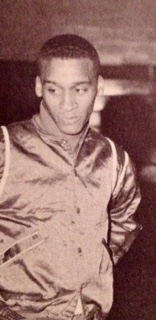
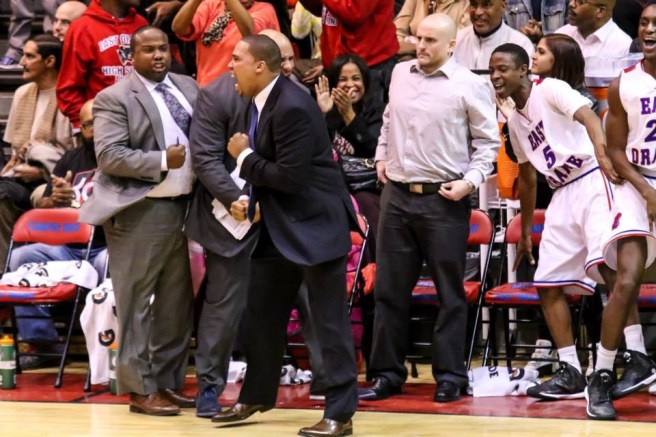
FullSizeRenderBilly Lovett coachingThe late Bill Lovett (top) star guard and leading scorer on East Orange High School’s 1964 basketball team would have been so proud to play for his son Billy Lovett (below) who successfully coached the East Orange men’s varsity for the past three seasons


Billy Lovett is talented personable and smart. He is also a veteran of big time college basketball at Fordham and the beneficiary of the tutelage of legendary high school hoops coach, Bob Hurley, Sr. at St. Anthony High School in Jersey City, NJ.

Mr. Lovett brought those considerable credentials to his native city to take the coaching the reins of the once proud–but lately floundering–basketball program at East Orange Campus High School.

He also brought the estimable legacy of his father, Bill Lovett, a tough, quick, smart and very accurate shooting guard who graduated East Orange High in 1964.The elder Mr. Lovett, who died in 2002, would have been so very proud of his son.

With the same talent that went 2-18 the year before he arrived, Billy Lovett transformed the Jaguars into a winning team that won league championships and contended for county and state titles.

More importantly, his teams performed meaningful community service, and his players hit the books as well as the hardwood.

Team members found their way onto academic honor rolls, into the National Honor Society and onto college campuses ready to compete in the classroom as well as on the court.

Mr. Lovett took an active interest in his players’ welfare. He invited one young man, who had no other place to live, to stay with him and his family. In so doing he saved the student from the street and showed him what a cohesive, loving family looks like. But this act of (perhaps life-saving) compassion violated some inane regulation, and Mr. Lovett was suspended for several games. The incident and the politics that went with it left a sour taste, so after three remarkable campaigns Billy Lovett will move on.

Lovett’s leaving will be East Orange’s loss. But with his talent and commitment there will be, no doubt, other opportunities for Billy Lovett to teach basketball and, more importantly, to touch lives.

Two Fine Rabbis; Two Different Fates

After a funeral I recently conducted in Congregation Beth Israel’s cemetery in Hartford, I was struck by something I had seen many times but that had never struck me before.

To my right was the grave of Rabbi Abraham J. Feldman who served Beth Israel for 43 years. He was a Hartford legend who received almost every accolade a rabbi can garner.

On my left were the remains of my friend and classmate, Rabbi David Mark Sobel. After his ordination Rabbi Sobel enlisted as a chaplain in the United States Air Force. Less than a year later he died in Bangkok in an automobile crash.

The two graves lie almost equidistant from the cemetery’s exit.

 David was funny, creative, smart, intense and a fine athlete. We played basketball and tennis with each other in the summer of 1968 when we both studied at Hebrew Union College in Cincinnati.

I asked out loud, “Why was Rabbi Feldman allowed to live out his years and be crowned with honor and glory? And why was it David’s fate to die as a young man with almost all of his dreams unfulfilled?”

Life is strange sometimes. Perhaps cruel is a better word.

Rabbi Feldman’s story is familiar and accessible to all who want to read it, but David’s story is also well worth knowing. I am grateful to the late late Mort Glotzer who remembered David as a boy and shared these memories with me:

“David was a fine athlete. I believe that he wrestled in high school and college. He worked as a construction laborer during summer vacations. He worked in the engine room of a freighter ship on his trip home.

After his ordination, David served as a chaplain in the United States Air Force.

We were stunned…The chief Chaplain from the Air Force preached at his funeral. There was a military honor guard but his mother, Bea, declined a rifle salute. It wasn’t the kind of honor that was appropriate for a Rabbi.

In another memorial tribute to David, navy chaplain Rabbi John J. Rosenblatt wrote:

“To know David Sobel … was to feel life and to sense an unusual creative ability. No one who met David was ever unaware of his presence. His keenness, his sensitivity, and his reverence for life were part of his being that made you aware that life was doing something for others.

David Sobel was a young man in his middle twenties who made those around him feel as young and as important as one could be. He was completely genuine, utterly sincere, and …His quick response was like a new beat to life’s call to action…

David felt that he was in God’s service to bring spiritual comfort where it was most needed. Individuals were his congregation. Open fields were his synagogue.”

Seeing David’s tombstone again today reminded me how fragile life is. It is a gift we can lose in an instant. Each visit to his grave is another reminder to try to make each minute of each hour of each day count for something meaningful and purposeful. We never know when our time is up.

“Alas for those who die with their songs still in them!” (Paraphrase of quotation by Supreme Court Justice, Oliver Wendell Homes, 1809-1894)

I see David now with the eye of memory … slashing toward the basket … going for broke by trying for an improbable winner on the tennis court … playing his guitar … speaking in the short clipped tones I remember, a kinetic, energetic force, small in stature, strong of body, persistent of mind.

His energy was so palpable that it is hard for me to imagine him gone even though he died more than 40 years ago. We played together. We learned together. Now he is gone, and I am still here.

“Why?” I ask, but the question brings no answer.

“Repent one day before your death,” Rabbi Eliezer taught. But how do we know when we shall die, a student asked?

“We do not,” answered the Sage, “so we had better repent today, for none of us has a guarantee on tomorrow (B. Shabbat 153A).”

Before I left the cemetery, I cleaned the mud from David’s tombstone. It was the least I could do—and sadly, the most I could do—for my old friend.


I Didn’t Deserve It

slfuchs's avatarFinding Ourselves In The Bible

What a thrill it was for me to be awarded the prize for the “Best Sermon Preached in the College Chapel” during graduation exercises at Hebrew Union college in Los Angeles long ago. My joy was dampened just a bit when a professor shared with me, “I thought you and Jerry Winston should have shared the prize.”

“But you were not even there the day I spoke,” I answered. “How can you tell?”

“I read your sermon so I have a very good idea how it sounded.”

“No, you don’t,” I said to myself, very glad I had won the prize … outright.

Jerry Winston was unique in those days, a man in his forties who decided to be a rabbi after a successful career as a writer in Hollywood. He was gentle and kind. He is gone now, but I will never forget him or his sermon.

He addressed…

View original post 126 more words