We Can Do Better

I cannot get the image our of my mind!
On a morning walk when I lived in Jerusalem, I could see minarets, church spires and the Western Wall of the ancient Temple courtyard.

I cannot get the sound out of my ears!
At this time of the year—this month of Elul that precedes Rosh Hashanah—I could hear the mingled sounds of shofars, church bells, and muezzin calls urging Muslims to prayer.

These persistent images and sounds represent harmony and mutual respect.

I treasure them.

Yet we all know that the realities of Jerusalem and those of the world at large are a far cry from the images and sounds that my heart holds fast.

And yet I cling to hope! We can do better!

The greatness of humanity is not that we have always lived up to our lofty ideals but that we have never failed to hold our ideals aloft.

Those words are not original with me (I would love it if a reader can point me too their source), but I wish they were.

It is easy to look at our world and launch into angry rants.

We can demand change in our government, protest many policies, and feel good that we are taking a stand for social justice. “It is (to quote Abraham Lincoln’s Gettysburg address) altogether fitting and proper that we do this.” We hope our protests will bring change down the road.

But real change–immediate change—can begin in our own hearts and with our own actions.

This may not be the year that the images of  harmony, affirmation and respect that I treasure from Jerusalem become reality.

But 

  • It can be the year when we express our own pain less and listen more to that of others.
  •  It can be the year we spend less time on our business and more time with our loved ones.
  • it can be the year we spend less on luxuries and more on helping others who have so little

It might not be the year that we change the world, but it can be the year that we change ourselves.


The Shrine of St Cecilia


The song was originally recorded in 1941 as a message of hope in response to World War II bombings.
But it is the Doo Wop version by Willie Winfield and the Harptones
(1957) that runs through my head as Hurricane Irma wreaks havoc on Florida.
Certain Doo wop songs have the ability to touch my heart and bring me comfort in troubling times. This is one of them:
Our home is in shambles
All I treasured is gone
The town seems deserted
Everyone’s so forlorn!
A storm came from up above
But somehow it missed
The Shrine of St Cecilia.

Irma, like Charley, Katrina and other disasters, has taken lives and left much of what we treasure in shambles.

Some have suffered greater loss than others. Regardless of the level of personal devastation, the key to our future is to find a “Shrine of St. Cecilia” in our hearts.
There are so many inspiring stories to hear and read of people coming together in the face of disaster to rebuild their lives and their dreams.
Not every story has a happy ending, but for those who have been spared it is the ability to cling to and build on hope that will determine the future.
The courage and resolve of many inspire me and, I pray, all of us, to do however little or much we can to bring hope and encouragement to others as the hurricane goes her way:

I kneel in my solitude
And silently pray
That Heaven will protect us dear,
And there’ll come a day
The storm will be over and
We’ll all meet again
At the Shrine of St. Cecilia.

Amen


Waiting

Waiting is the hardest part!

I have never dealt with a hurricane so personally before, but waiting is excruciating. We are safe , thank God, in Connecticut because our children and others prevailed on us to postpone our journey to Sanibel until the storm passes, and the island is safe.

In checking with members of my new congregation most of them are safely elsewhere. Many have tales of what Charley did in 2004. Moods range from resigned and anxious to hopeful and upbeat.

I learn a lot from them!

TV reports are increasingly ominous. Fort Myers’ streets are deserted. The trees are swaying, and the waves are high. In Naples wind and rain are increasing rapidly. Similar reports come from Sanibel. It seems like a prelude to a frightening drama called:

STORM SURGE

A week ago that term was not even part of my vocabulary. Now I wait for it to unfold, and waiting is the hardest part.

Ecclesiastes teaches: לכל זמן ועת  L’chol zman et! “To everything there is a time. (Ecclesiastes 3:1)

We were all psyched, almost packed and ready to move to the house in Sanibel that will be our home until May. I am eager to settle in, meet members of my new congregation, prepare for and welcome the New Year with them.

But now is the time to wait and to pray.

And waiting is the hardest part.

The Zookeeper’s Wife

I have a new favorite movie.

I don’t go to movies much, but Vickie urged me to see the Zookeeper’s Wife that she saw on a plane to San Francisco. On the way home I watched it too.

IT IS SO POWERFUL!

It is about Antonina and Jan Zabinski who ran the zoo in Warsaw when the Nazi’s invaded Poland.

It is a beautifully told story about how this heroic couple saved 3000 Jews from the jaws of Nazi savagery.

The movie is “based on a true story.” I will research the details to sort reality from fiction, but I know there is enough truth in the story the movie depicts that the State of Israel has recognized the Zabinskis as “Righteous Among the Gentiles,” the highest honor the nation can bestow on non Jews for heroic feats of saving Jews during World War II.

The Holocaust testifies to the depths of bestiality to which human beings can descend. But stories like this testify to the heights of heroism to which we can aspire and attain.

The words of Psalm 8 come rushing to my mind.

“What is humanity that You are mindful of them … For You have made them little lower than the angels and have crowned them with honor and glory.” (Psalms 8:6)

Each of us has the potential to attain such a crown, but sometimes it takes courage that nearly defies the imagination to wear it.

In this month of Elul that leads up the sacred season of Rosh Hashanah and Yom Kippur our tradition urges each of us to seek the angel that resides in our soul. This month, more than any other, calls us to reach for and grasp hold of our best selves.

I don’t go to movies much, but I will watch this one again hoping it will help me to reach higher than I have to enhance the “Divine Image” (Genesis 1:26-28) in which each of us was created.


Converging Generations with Her Brush


FullSizeRender2016-09-23 19.59.08

My mother-in-law is a genius! At 96 she lives independently and still does artwork for which she is justly renowned!

Yesterday, Vickie and I took her out to lunch. As we dropped her off I walked through her garage turned gallery where some of her wonderful works hang. I noted two lovely water colors of Vickie and her sister Claudia.

As her son-in-law for 43 years, I thought there should be one of me. So I asked her when she might do it?

Vickie gave me a dagger look, but Stephanie smiled and said, “How about now? Wait here.”

Five minutes later she returned with a towel, a brush, a few tubes of paint, a small dish of water and a small canvas.

“Sit here,” she instructed.

So I sat.

As she began dabbling with the paint, her face transformed. Years, even decades dropped away as she alternately tilted her head this way and that, looked up and down, and smiled. Her beautiful eyes sparkled.

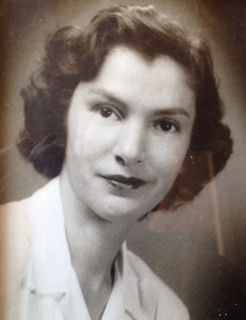
Ten minutes later she handed me the photo at the top of this essay.

I was floored!

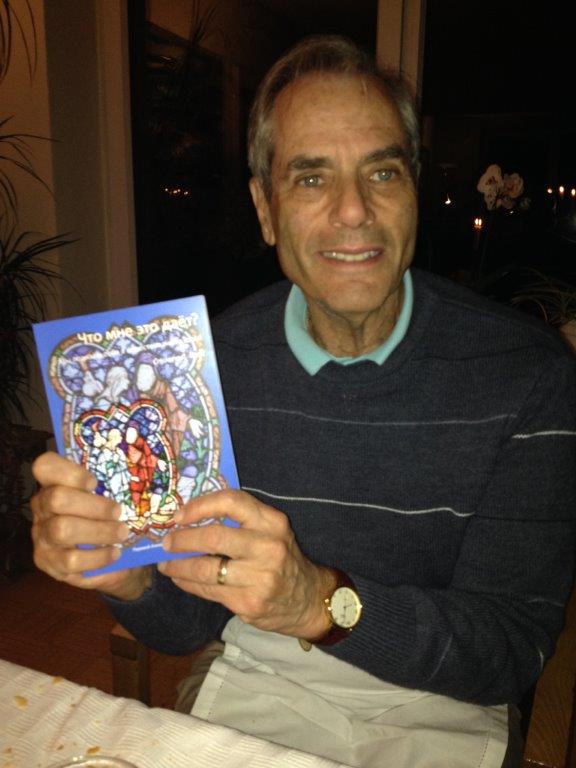
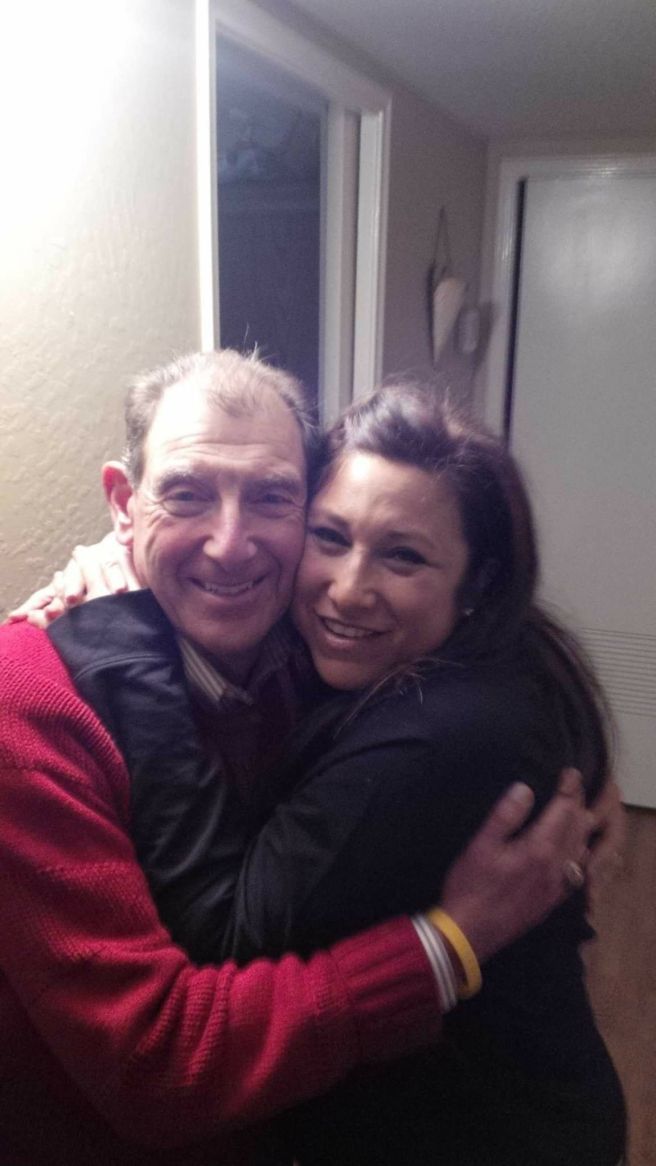
For years people have told me that I look like my mother who looked like her father (pictured next to me, above),  but I never saw it.

Now I do. Clearly!

With her unique eye and exquisite talent, Stefanie converged the generations. Through her genius I see my Poppy, my mother and me all at once.

Yesterday was the eleventh anniversary of my mother’s death. I miss her terribly. There is a tribute to her (just search for Florence Fuchs) on this blog.

My grandfather died when I was ten, and if you read my essay, “Poppy” (also on this blog), you will know how my mother and I both felt about him.

Now, miraculously, Stefanie has brought us all together again!

It is a priceless gift for which I shall always be grateful!


Draw That Kof! by Susan Marie Shuman

Hi Everybody!

My name is Susan Marie Shuman and I am your guest blogger today.

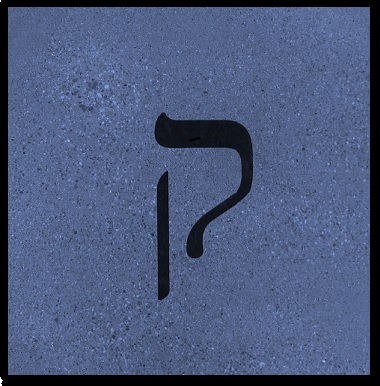
You may recall a few months ago, my friend Rabbi Fuchs & I ran a Name That Kof Contest in honor of his book, Why the Kof? Getting the Best of Rabbi Fuchs. 

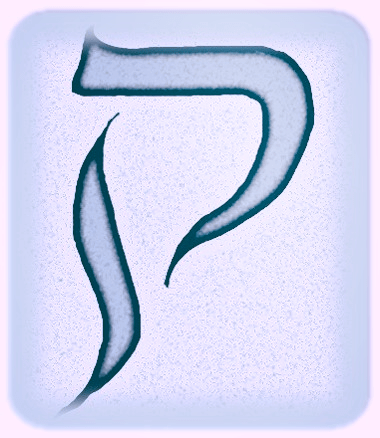
It  went over so well that this time we decided to appeal to your artistic side & ask you to draw the Hebrew letter Kof.

Click here to view a slideshow of Kofs that I’ve created so you can get an idea of what one looks like. Use any medium you’d like and enter as many time as you wish. The deadline is October 4th.

Send your entries to me at SusanWritesPrecise@gmail.com

The artist who creates the most appealing/creative/coolest Kof will win a free signed copy of Rabbi Fuchs’ soon-to-be-published book, “Why Triple Chai? More of the Best of Rabbi Fuchs.”

You’ll also get shout-outs all over Facebook, Twitter, LinkedIn, WP, and any place else I can think of.

I hope many of you will participate and have some fun with this. If you have any questions, feel free to email me at the address above.

Thanks & Good Luck!


Ceiling Tile Kof (Named by Akuokuo Vallis) Click to view her blog!


Ed Kalin

Ed with his wonderful daughter Ivy

20900650_10213715835592849_5610848620256317993_o


For much of my life I have been around tennis courts. My experience including five full summers as a teaching pro convince me that I can learn more about people watching them play tennis—regardless of their skill level—than I could if I interviewed them for an hour face to face.

Even before I got to know Ed Kalin, I saw quite a bit of him on the tennis courts both from the sidelines and from the other side of the net. The test of character that every tennis player I see undergoes, whether he or she knows it or not, was a test Ed passed with flying colors.

He was intense and competitive, yet scrupulously fair. He was gracious in both victory and defeat. He carried himself with confidence but never with arrogance, and he never made excuses.

I got to know Ed much better when he studied with me for his adult Bar Mitzvah, an event in which he took great pride. He was less concerned with the mechanical aspects of reading the portions—although he did them flawlessly—than with what he could teach the congregation about what he had learned.

How proud he was just a few months ago when I asked him—in the middle of a lecture I gave in his new hometown of Scottsdale– to tell those in the audience what his Torah portion means to him today.

He spoke with reverence and enthusiasm, and I kvelled. I knew Ed would have no trouble doing so, and in so doing Ed played a major role in helping me drive home my major point that the stories in the Torah are really stories about us and our lives today.

Ed’s Torah portion fit him perfectly. It was about the Golden Calf, the idol our ancestors demanded Aaron make for them to worship at the foot of Mount Sinai.

Ed understood and cherished the opportunity to teach that idol worship is much more than bowing to graven images. Idol worship is when we put greed and selfishness above kindness, caring and compassion. For sure Ed Kalin never did that.

The lessons he taught from the Torah were the lessons he lived in his life. And they were the same lessons he exuded when I watched him play tennis.

Speaking of tennis, Ed found great joy and satisfaction in his post retirement career as a teaching pro. He loved giving lessons, and he loved seeing kids make progress.

Ed and his high school sweetheart, Maddy, shared almost 49 years loving marriage together. Their daughter Ivy, her husband Larry, and their twin grandchildren were the light of Ed’s life. He felt truly blessed to have them living close by.

There is something very unfair about watching a kind, caring man suffer and die the way Ed did. But Ed knew well, and we do well to remember, that life is not always fair.

Ed’s life testified to the lesson of the Rudyard Kipling, poem, If, a quotation from which hangs in the tunnel near the entrance to Center Court at Wimbledon:

        “If you can keep your head when all about you others are losing theirs    …

        If you can meet with triumph and disaster

        And treat those two imposters just the same…

       If you can fill the unforgiving minute

       With sixty seconds worth of distance run …

       Yours is the earth and everything that’s in it

       And—which is more—you’ll be a man my son!

 Ed Kalin was a man in the finest sense of the word! He was a man I was proud to know, and a man who taught me much about living and dying. He was the type of man I will always aspire to be, and his memory will endure for a blessing!

The Chosen People: One of the Most Misunderstood Jewish Concepts

With all my heart I believe God chooses specific individuals for specific tasks. I believe God chose Abraham to begin the journey that created the Jewish people. I believe God chose Moses to lead us out of Egypt. I believe God chose William Harvey to teach humanity about the circulation of blood, and I believe God chose the Wright brothers to inaugurate the era of aviation.   I believe God chose Abraham Lincoln to end slavery in this country, and I believe God chose Martin Luther King to make the dream of racial equality more of a reality in our society.

If individuals can have destinies, why not peoples as a whole?

Just as God chooses individuals for certain tasks, so too does God choose peoples for certain tasks. As I look at history, I agree with an essay written by the late Professor of Labor Relations at Cornell, Milton R. Konvitz called, “Many are Called And Many are Chosen.”   He noted that God chose the ancient Greeks to bring the world an unprecedented sense of beauty, and God chose the Romans to teach the world new ideas about order.

God chose us Jews too. God chose us, as Thomas Cahill teaches in his best selling book Gifts of the Jews, to give the world a sense of the sanctity of time. Before we came along, Cahill notes, people perceived life as a series of repeating cyclical events.

“The Jews were the first people to break out of this circle, to find a new way of thinking and experiencing, a new way of understanding and feeling the world…” Cahill’s book is nothing more—and nothing less—than a defense of the concept of chosenness. It is a book that can give Jew pride in the role our people play in history. It also is good that a gentile wrote the book because it might seem too prideful if one of us had.

Nearly three thousand years ago the Prophet Amos taught that we are not better than others, but that we have particular responsibilities. Amos wrote: “I have known you uniquely among the peoples of the earth. Therefore I will hold you accountable for every one of your transgressions.” (Amos 3:2)

No, to be chosen does not mean we consider ourselves better than anyone else.   Still, many Jews, both famous and ordinary, shy away from the concept of chosenness because they fear anti-Semitic reactions.

Do we really think we will mollify anti-Semites by disavowing our destiny as a people?

We shall not. Anti-Semitism is the responsibility of anti Semites, not the responsibility of us Jews.

Abandoning the idea that God has chosen us for the task of bringing the ideals based on Torah to the world will not stop either anti-Semites or anti-Semitism.

Jews do not hold exclusive rights to acts of goodness. God revealed Torah to us, the Midrash teaches, in the desert, so we would know that its ideals are open to everyone who wishes to embrace them. They are not the exclusive property of any one faith or people.

It is well and good that other peoples have adopted those ideals. Let them pursue them in their own ways, and let us acknowledge that often those ways inspire those who follow them to remarkable acts of caring and compassion that we do well to emulate.

Still, Judaism has done so much to civilize this world. It is no accident that Jews who represent less than ½ of one per cent of the worlds’ population have won more than 30% of the world’s Nobel Prizes.

No it is not an accident.

It is the product of a religious and cultural system that has stressed learning and literacy as ways of serving God.

It is the product of a religious and cultural system, which teaches us, Lo Toochal liheetalaym. You must not remain indifferent to the suffering of another even if the other is our enemy (Deuteronomy 22:3). It is the product of a religious system that calls on us to be “L’or Goyim, a light to the nations” (Isaiah 49:6).

Look at the values and culture of the world around us. Look at the violence that stalks our schools, our cities and our towns. Look at the hatred which threatens to rip apart the very fabric of civilization.

Is it really time for us to turn away from a way of life that has done so much for humanity over the centuries? Can we really afford to be less particular in our Jewish practices and studies? Should we trade Jewish worship and practice for a generalized civil religion, which says, “just be a good person?”

No, let us cherish the belief that God singled us out to bring the ideas of Torah to the whole world.

Chosenness does not mean privilege, and choseness does not mean exclusiveness.

Still, there are people who want no part of it.   We have often been the targets of enemies, and many have looked at our history and our suffering and said with Tevye the Dairyman, “God if this is what it means to be chosen, please, choose someone else.”

And yet, we continue to persist and exist, and with God’s help we shall continue to do so.

Chosenness is a choice, a challenge and an achievement.

The choice to be chosen is ours to make or reject. Choosing to be chosen, I believe, is to believe that God cares deeply about the choices we make–not only as individuals but as a people whom God chose to bring the ideals of Torah to the constant attention of the world.
Why I Love the Lone Ranger

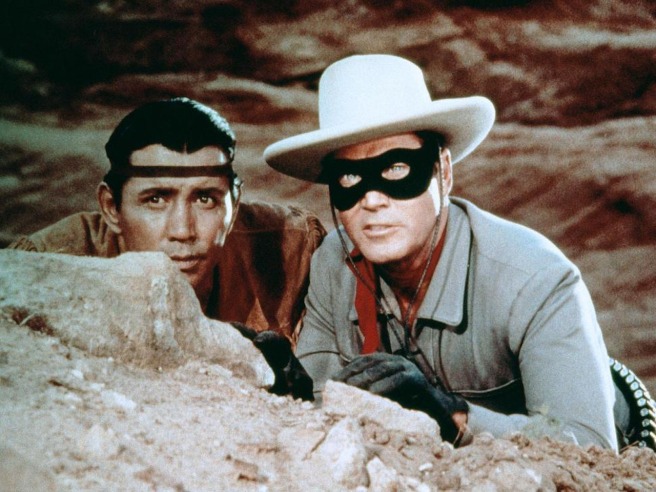
LR_1956_Moore_SilverheelsWhy would a 71-year-old rabbi spend time watching reruns of “The Lone Ranger,” a western television show more than 60 years old? The answer is simple: The message.

 As creatures created b’tzelem Elohim (in the image of God), our primary responsibility and purpose is to use our skills and talents to create a more just, caring, and compassionate world.

Although we may not cure cancer or make peace between Israel and the Palestinians, our covenant with God requires each of us to do what we can to fulfill the charge God made to Abraham in Genesis: to “[k]eep the way of the Eternal one, and to fill the world with tzedakah u’mishpat (righteousness and justice).

Pursuing righteousness and justice is exactly what the Lone Ranger and Tonto do. Battling hopeless odds, they right wrongs; thwart those who kill, cheat or exploit others; and help the good guys come out on top. In real life, of course, evil often triumphs over good, and fighters for justice and righteousness do not always prevail.

No matter what we have suffered, and no matter how dire things may have been, our people clings to the idea that the world can be better – and that we can be agents in that improvement.

We do well to remember that in the wake of Charlottesville!

Indeed, the Lone Ranger and Tonto symbolize the vital Jewish value of hope, always on the lookout for evil forces to defeat and never seeking or accepting rewards for doing what is “just and right.” Once their work is done, they ride off swiftly, searching for the next opportunity to make a positive difference in the world.

In particular, Parashat Re’eh, this week’s Torah reading, reminds me of what the Lone Ranger and Tonto represent. First, we read God’s ideal: “There shall be no poor or needy in your land” (Deuteronomy 15:4). But several sentences later, we confront the contradictory reality: “But the poor shall never cease from your land…open your hand to the poor and needy kin in your land” (Deuteronomy 15:11). Do not turn away from them. Do whatever you can to help.

The Lone Ranger and Tonto embody this ideal, fighting relentlessly to make the Wild West a place in which ruthless villains are nearly powerless to thwart others’ hard work or hope for the future.

But, just as these two cannot eliminate the bad guys entirely, neither can we create a world that is fully without evil. It is a glorious ideal that constantly eludes us.

But we, like the Lone Ranger and Tonto, can inch the world closer to that celebrated hope. Their work – and ours – takes on greater urgency as the Hebrew month of Elul approaches and with it the task of scrutinizing our conduct to determine how we – individually and collectively – might live closer to God’s hope for us.

Our tradition teaches that after shattering the Golden calf, Moses went back up the mountain on the first of Elul to try again. He hewed new tablets and spent 40 days in contemplation on Mt Sinai before descending, on Yom Kippur, with the second set of God’s commandments.

When we reach the first of Elul in less than a week, Yom Kippur will be just 40 days away. The Lone Ranger and Tonto model well how we can use these precious days, and it is reflected in this story I first heard from Rabbi David Saperstein more than 40 years ago:

A man who went every day to the wicked city of Sodom encouraging the people to repent.

His friends called him a fool saying, “Don’t you know those people will never repent. Why do you go down there every day wasting time and energy? Those people will never change and be like you.”

“Perhaps not,” the man answered, “but I must do what I can every day, so that I don’t change and become like them.”

No, the good guys don’t always win and the world will never be perfect. It is for these very reasons that I love watching “The Lone Ranger” because he and Tonto never stop trying to make our world a better place – and we can do the same.


What Disturbs Me Most About Donald Trump

In the year preceding the election and in the days that followed I wrote a number of essays about President Trump and included them in my book, Why the Kof? Getting the Best of Rabbi Fuchs https://tinyurl.com/jz4utns

For several months, though, I have had nothing to say about him.

The primary reason is that others have—more pointedly and eloquently than can I–written everything I feel about his policies, appointments and public statements.

But eight months after his inauguration I must express my dismay:

Donald Trump diminishes the pride I feel as an American.

When I see him dressed as the American flag in red (tie) white (shirt) and blue (suit) responding in such an equivocal, mealy-mouthed way to the violence in Charlottesville, I want to vomit.

As horrible as they are, moments of tragedy are golden opportunities for a president to stand tall and unite the country in pride and resolve.

Such horrible moments allow the president to speak for all decent Americans and express the country’s outrage and resolve to do all that is necessary to comfort the victims and condemn the perpetrators.

Even a president I did not like, George W. Bush, rose admirably to that responsibility in the aftermath of Nine Eleven.

But Trump? Uh Uh!

Whether you agreed with him or not, Barack Obama is a man of gentility and class. He was almost always eloquent and appropriate in his responses to terror and those who besmirched the values this country represents.

But Trump is the opposite. He represents nothing but selfishness, greed and a callous disregard for the very people, as Emma Lazarus wrote on the Statue of Liberty, our country is here to protect: “your tired, your poor, your huddled masses yearning to breathe free.”

Donald Trump has offered these precious potential sources of our country’s future greatness nothing but an upraised middle finger.

He seems to wink at—if not fan–racism, Islamophobia and anti-Semitism. His grandiose promises to repair our country’s infra structure, bring thousands and thousands of jobs back to America, bring an end to urban violence and uproot international terrorism have been nothing but empty words.

But what is most disturbing is that so many people continue to rally around him.

In addition to continuing to condemn Trump and protest his actions and policies, it is in our vital interest to understand why.

What is it that he brings to the table that induces so many to resonate to his words and persona?

Until we find the answers to what is really behind Trump’s appeal, we will continue to write essays that allow us to get things off of our chest. And yes, we should.

But we will really be no closer to fixing the problems that led to his election in the first place.

And that is what disturbs me most about Donald Trump!