The Jewish Marriage Ceremony

My rabbinical colleagues have been having an animated exchange about merits of traditional elements in the Jewish Marriage Ceremony. I offer the following essay to couples to help them decide how they wish to structure their ceremony.

“It is not good for man to be alone; I will make a fitting partner for him.” (Genesis 2:18) In this verse one finds the initial expression of what became the classical Jewish view of marriage. The ancient Rabbis considered marriage both the norm and the ideal. They frowned upon celibacy and viewed marriage as a necessity for complete human fulfillment.

Because the Rabbis viewed marriage as God’s desire for humanity, they carefully examined scripture for insights into this divinely ordained relationship. In pondering the Genesis account of the Garden of Eden, the Rabbis asked, ‘Why does scripture portray Eve as evolving from Adam’s rib?” They answered their own question by asserting, “She was not taken from his head to be superior to him, or from his foot to be beneath him. Rather, she was taken from his side to be equal to him and from near his heart to be loved.”

The Hebrew word for marriage is kiddushin, which literally translated means “holiness”. Through the marriage ceremony a man and a woman consecrate themselves (i.e., make themselves holy) to one another. The Hebrew concept of holiness contains the notion of uniqueness. In the marriage ceremony the partners set one another apart from the rest of the world and enter into a uniquely holy partnership.

Often, on the day of their wedding, a bride and groom will fast until the ceremony. Jews ordinarily fast on the Day of Atonement, the solemn holy day on which the Jew seeks forgiveness for his/her wrongdoings of the past year.

Jewish tradition emphasized the unique holiness of a couple’s wedding day by considering it, like the Day of Atonement, a day when their past misdeeds are forgiven. When a couple affirms this traditional outlook, they begin married life with their hearts and minds focused on the future they will build together, not on past errors.

The Jewish marriage ceremony takes place under a chupah, a wedding canopy which symbolizes the home the couple will establish. Whether the chupah is simple or ornate, its purpose is to remind the bride and groom of the important role each must play in the creation of a meaningful Jewish home life.

In traditional Jewish weddings, the bride will walk around the groom seven times when she joins him at the chupah. By encircling him seven times, the bride symbolically enters into the seven spheres of the husband’s soul referred to in Jewish mystical tradition. The act of circling represents the intimate unity, understanding, and mutual concern which the couple will, hopefully, strive for in their married life. She also symbolically presents herself as a wall of protection for her husband.

An important feature of the wedding ceremony is the couple’s sharing of the cup of wine sanctified by the appropriate blessing. Wine is a religious symbol of joy and a prominent ritual feature at all Jewish festive occasions. By sharing the wine cup under the chupah, their symbolic home, the couple sets a pattern for observing holidays and festivals according to Jewish custom in the real home they will establish. Also, by sharing from the same cup at their wedding, the bride and groom affirm that they will share together whatever joy or sadness the cup of life offers them.

In addition to the traditional blessing over the wine, the ceremony contains six other benedictions, making a total of seven wedding blessings appropriate to the occasion. Because of its prominence in Jewish biblical, rabbinic and mystical tradition, seven is considered an extremely fortuitous number.

In the period of the Talmud (from 200 BCE to 500 CE) there were two formal ceremonies leading to marriage. The first was a ceremony of betrothal which could be dissolved only through divorce proceedings. A year later, in most cases, the actual wedding occurred. In time, it became the custom to combine the two ceremonies. At traditional Jewish weddings today, the couple will share the goblet of wine at two points in the ceremony to symbolize the once—distinct rites of betrothal and marriage which are now celebrated together.

A vital feature of traditional Jewish weddings is the reading of the ketubah, the Jewish marriage contract. The ketubah, which delineates the conditions under which a marriage occurs, was originally designed to carefully protect the rights of women in married life. The Rabbis considered Jewish marriage as a legal covenant in which both partners have dearly defined rights and obligations. At the same time, the Rabbis viewed marriage as the quintessence of personal relationships characterized by love, growth and mutual sharing.

Often, the ketubah, which is a legal document under Jewish law, is beautifully hand-lettered and ornately decorated. Such artistic ketubot (plural of ketubah) symbolize both the legal guarantees and romantic ideals of the marital relationship.

The repetition of the Jewish marriage formula by the groom is an essential feature of any Jewish wedding ceremony. As he places the wedding ring on his wife’s right forefinger (where it can be most clearly seen), the man repeats the Hebrew formula which means “Be consecrated to me as my wife with this ring according to the religion of Moses and Israel.”

In every ceremony that I conduct the bride also places a wedding ring on her husband’s finger and (changing “wife” to “husband”, of course) will repeat the exact same formula as the groom. This act symbolizes that not only does the husband acquire a wife, but the wife acquires a husband as well. Jewish law stipulates that wedding rings be of plain metal, containing no gems or stones. The metal of the ring, it is felt, should be unbroken by gems just as the harmony of the couple should be undisturbed by outside influences.

The ceremony concludes with the groom crushing with his right foot a glass which has been carefully wrapped to prevent shattering. Although the origins of this custom are shrouded in mystery, several explanations have been offered for its familiar place in the wedding ceremony. One of them is that the breaking of the glass symbolizes the destruction of the Temple in Jerusalem, a sorrow which the Jews should remember even during happy times. For many modern couples, the breaking of the glass is significant as a reminder that even in moments of supreme joy, we remember that there are many in the world whose lives are broken by sadness and pain.

The groom’s act of forcefully breaking a glass also provides a reciprocal response to the wife’s circling him at the outset of the ceremony. Just as her act is a sign of her vow to protect him, his breaking of the glass serves as a warning to any who might intrude on the sanctity of the marriage.

Immediately following the ceremony, the couple repairs to a private room to break their fast with a brief meal and spend their first precious moments as a married couple alone together. After a few brief minutes of privacy, the couple emerges to greet their guests.

Not all Jewish weddings contain all of the features mentioned here, because couples vary in their desires for traditional elements in their ceremony. No matter what practices it includes, though, a Jewish marriage ceremony endeavors to give warm expression to meaningful religious symbolism. A ceremony, no matter how rich or warm, cannot insure a successful marriage. Hopefully, though, the Jewish couple who are aware of the meaning behind the ritual will emerge from their chupah with greater appreciation of the rabbinic ideal of mutual affirmation and protection in marriage and the hope that the Eternal One will bless their union.

UNVARNISHED


← Back

Thank you for your response. ✨

UNVARNISHED.

The Parsonage Has A Sukkah!

The Jewish harvest festival of Sukkot begins five days after Yom Kippur. We celebrate by building a sukkah, a small hut outside our homes to symbolize the temporary homes of our ancestors while they traveled through the desert after being freed from slavery in Egypt.

“A child who has the experience of building a sukkah,” my Theology/Liturgy Professor, Jakob J. Petuchowski, of blessed memory, used to tell us, “has a Jewish experience worth six months of Sunday school.”

The outstanding American writer, Noah Gordon, in his 1964 best-selling novel The Rabbi, captured the essence of just how important a sukkah can be for a child: “The bond between Michael and his zaydeh (grandfathergrew stronger during the early fall, when the days began to shorten and the autumn feast of Sukkot drew near. Each autumn during his four-year stay with the Rivkins Zaydeh built in their postage-stamp back yard a sukkah, or ceremonial hut. The sukkah was a small house of wooden planks covered with boughs and sheaves. It was hard work for an old man to build it, especially since hayfields, corn shocks and trees were not plentiful in Brooklyn. Sometimes he had to go deep into Jersey for raw materials, and he badgered Abe for weeks until he was driven to the country in the family Chevrolet.

‘Why do you bother?’ Dorothy asked him once when she brought a glass of tea to where he strained and perspired to raise the hut. ‘Why do you work so hard?’

‘To celebrate the harvest.’

‘What harvest, for God’s sake? We’re not farmers. You sell canned goods. Your son makes corsets for ladies with big behinds. Who has a harvest?’

He looked pityingly at this female his son had made his daughter. ‘For thousands of years, since the Jews emerged from the Wilderness, in ghettos and in palaces they have observed Sukkot. You don’t have to raise cabbages to have a harvest.’ His big hand grasped Michael behind the neck and pushed him toward his mother. ‘Here is your harvest.’ She didn’t understand, and by then Zaydeh had been living with them long enough not to expect understanding from her.”

Our family sukkah to which we invited congregants every year was a very precious part of our family’s Jewish identity over the years. Our children were fascinated by it as babies, loved decorating it as children, and helped set it up when they were older. They loved inviting their non-Jewish friends over to help decorate. Now they have children of their own, and celebrate Sukkot with them.

Each year we looked forward to having our congregants join us for a reception in the sukkah. As much as our sukkah meant to our children, it meant at least as much to us. 

In addition to the huts our ancestors lived in when they wandered through the desert for 40 years, the sukkah today symbolizes that too many have homes to live in all year around that offer no more protection against the elements than these fragile huts. The Sukkah teaches us that the less fortunate are our responsibility. We cannot in good conscience turn away.

Yes, Rabbi Petuchowski was right about the sukkah and six months of Sunday school. In fact I think he might have  understated the case.

This year in Bad Segeberg, Germany, our hosts Pastorin Ursula Sieg and Pastor Martin Pommerening got wind of how important the custom was to us back home and took it on themselves to erect a sukkah in their backyard. This gesture means so much to us. This sukkah more than any other we have ever enjoyed symbolizes our hope for inter religious cooperation and reconciliation that inspired us to spend these ten weeks in Germany.

Eternal God, spread סוכת שלום “the Sukkah of Peace” over us, over all Israel and over all humanity! May we may dwell in it together in harmony!

Amen

Sukkah photo

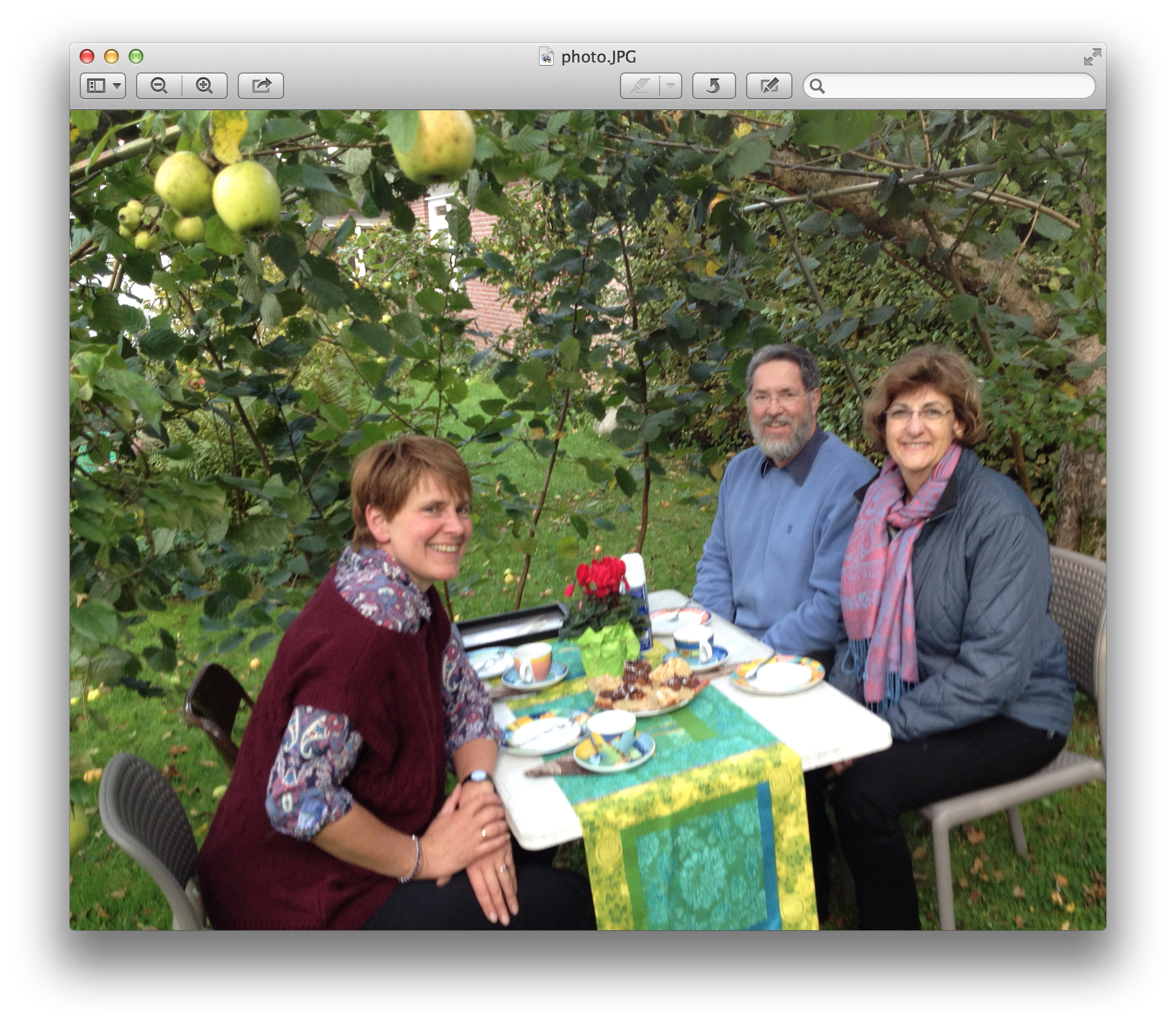
Pastorin Ursula Sieg (l) Pastor Martin Pommerening and my wife Vickie sitting in the magnificent sukkah Martin and Ursula erected for us to honor the festival of sukkot in their backyard.

UNVARNISHED

Yom Kippur is almost here: It is the Day of Awe. It is the culmination of a 40-day period of reflection and repentance, which (if and only if we take it seriously and personally) can leave us feeling cleansed and renewed. But it takes work, hard work.

All year long we puff ourselves up in an attempt to impress our bosses, dates, prospective employers, those with whom we communicate on Facebook, and everyone else. Yom Kippur demands that for one day we strip away this puffery.

And so I look deep into my soul and ask: Why did I do the things I did? What was I really hoping to accomplish? Did I want to help others? Or did I want to aggrandize myself? Can the two desires be congruent?  God commands me to struggle with tough questions. There is no place for pretense on Yom Kippur.

And so, I ask: Why does it mean so much to me to be introduced with the words: “This is the first time a rabbi has ever given the sermon in the history of this church?” I guess I want to matter. I want my words and my presence to be important.

But who cares, really? I give a sermon, people react nicely, and I am gratified. But so what? Does anything really change? I hope I leave a lasting impact, but I also look for approval. I feel good when I finish, but the good feelings fly away quickly, and like an addict I look for more approval.

I struggle: Will I ever truly rejoice in others accomplishments instead of feeling jealous of them? There will always be those better known and, in conventional terms, more successful. Why can’t I, as Rabbi Simeon ben Zoma advised nearly two millennia ago, rejoice in the abundance of blessings life has showered upon me.

Yom Kippur urges us to imagine our death, and to tailor our actions accordingly. Time is short for all of us. The Day bids me to ask: Am I spending my precious time and energy as I should? Does my life really matter? What can I change to insure that it does?  Will anything but my death stop my yearning for approval?

These questions are especially acute and probing for me as I prepare for Yom Kippur in the midst of our ten-week stay in northern Germany. Yes it is an exciting adventure, but what are my motives for coming? Are they really just the opportunity to teach in the place that symbolizes our people’s greatest tragedy about the tradition I love?

Here is my hardest confession this Yom Kippur. Yes, I want to give, but I also want to receive. I want to be better recognized. I want my presence here to help me sell more books because I believe passionately in the value of the book that has been in my soul for forty years. But to some extent—even though I know I shouldn’t–I will measure my sense of self worth by how many copies of What’s in It for Me? I sell.

There! I admitted it. I wrote the damning words for anyone interested to see the unvarnished truth. I resist the impulse to take them back by pushing delete before it is too late.

One of the most important books I read last year was the late Susan Ford’s, The Dark Side of the Light Chasers. She taught me to embrace, “the gold hidden in my darkness.” I believe, as she wrote, “it is my job to take my most human self” as I am and “transform him into my most extraordinary self.”

And so I confess. I embrace that part of me which is self centered and egotistical. I do not ask God  to uproot what is part of my nature.  I pray to use those impulses for good. Help me, Eternal One, please, to care more about what I am doing for others than what I am doing for myself.

Amen

Jake, Hank, Sandy and Me

This essay was originally published in, Judith Zabarenko Abrams and Marc Lee Raphael, eds., What is Jewish about America’s Favorite Pastime? (The College of William and Mary, Williamsburg, VA), 2006.

 For me, my consciousness of my special identity as a Jew as it relates to athletics began back in the 1950s, when, on a Rosh Hashanah afternoon, I heard the mellifluous voice of the great Red Barber say, “The old familiar number 31 of Brooklyn first base coach Jake Pitler will be missing today as he is observing the Jewish New Year and is not in the ball park.”

My consciousness of Jews in American sports developed further during Oneg Shabbat (reception following service) at Sabbath Eve services at my congregation, Temple Sharey Tefilo in East Orange, New Jersey. My parents were regular Sabbath eve attendees, and as I look back on my childhood, I realize that one of the most precious gifts they gave me was to bring me with them. I wanted to be with them although I often counted ahead to see how many pages were left in the service. At the Oneg Shabbat, while they socialized with friends, I drifted into the Temple’s combination museum and library and browsed through the exhibits and the books.

Invariably, as a young boy who loved athletics, my hands picked out The Jew in American Sports, by Harold U. Ribalow. The book was published in 1952 and contained sketches of Jewish athletes most of whom I had never heard of. Their stories fascinated me. I became familiar with such names as Morrie Arnovich, Al Singer, Moe Berg, and, of course, Hank Greenberg. Sandy Koufax came of age as a baseball and Jewish icon as I moved through high school and college.

Greenberg and Koufax were not just Jews who happened to play sports. They were Jews who, through circumstances of time, location, and the game of baseball, became symbols of Jewish pride as our people searched for the elusive balance in their identities as Jews and Americans. They – perhaps unwittingly – helped us in our struggle to gain full acceptance in a gentile world while maintaining (to differing degrees) our identity as Jews.

Hank Greenberg

American antisemitism reached its peak in the 1930s. The Great Depression proved the well-known axiom that the comfort level of Jews is in a direct relationship with the health of the economy. With Henry Ford’s Dearborn Independent still popular and his book, The International Jew, the World’s Foremost Problem, and the rantings of Father Charles Coughlin leading the way, the 30s were not a comfortable decade for American Jews especially in the Detroit area, where Greenberg played.

Hank Greenberg’s story is well-known to us. According to The Baseball Page.com, “Amid the rising antisemitism of the 1930s, Hank Greenberg’s baseball heroics took on symbolic meaning for many Jewish Americans. He was the first baseball star to enter the military in World War II, doing so voluntarily.”1

As a player, Greenberg ranks among the all-time greats. He is the first and only one of only three players in all of history to win Most Valuable Player awards at two different positions (he played first base and left field). He played in four World Series in his war-shortened career, and he led the Detroit Tigers to two world championships in 1935 and 1945.

In 1934, Hank batted .339 with 63 doubles, and he hit .328 with 170 RBIs in 1935. Injuries hampered him in 1936, but in 1937, he drove in 183 runs (one short of Lou Gehrig’s all-time record) with 103 extra-base hits and a batting average of .337.   In 1939, he hit 41 home runs and had 150 RBIs, with a batting average of .340.

His greatest year, though, was 1938, when he hit 58 home runs with 146 RBIs. His 119 walks might well have prevented him from eclipsing Babe Ruth’s home run record, and it was frequently heard that he received so many passes because of a reluctance of many in baseball to have a Jew equal or tie Babe Ruth’s record.

The reluctance of Tiger Manager Bucky Harris to play Greenberg regularly as a young player, and the Tiger’s curious sale of a still productive and very popular Greenberg after the 1946 season, suggests to many that antisemitism was still a factor in Major League Baseball decisions during the years of Greenberg’s career.

My interest in Greenberg, though, is as the role model he became for American Jews. He was by no means a religious man – although his parents were Orthodox-–but he did sit out on Yom Kippur and actually consulted a Reform rabbi who gave him (incredulously, to me) his okay to play on Rosh Hashanah during a tight 1934 pennant race. In that Rosh Hashanah contest, Greenberg hit two home runs in a 2-1 victory. When he sat out on Yom Kippur, though, he inspired the following poem by Edgar A. Guest, which appeared in The Detroit Free Press:2

The Irish didn’t like it when they heard of Greenberg’s fame

For they thought a good first baseman should possess an Irish name;

And the Murphy’s and Mulrooney’s said they never dreamed they’d see

A Jewish boy from Bronxville out where Casey used to be.

In the early days of April not a Dugan tipped his hat

Or prayed to see a “double” when Hank Greenberg came to bat.

In July the Irish wondered where he’d ever learned to play.

“He makes me think of Casey!” Old Man Murphy dared to say;

And with fifty-seven doubles and a score of homers made

The respect they had for Greenberg was being openly displayed.

But on the Jewish New Year when Hank Greenberg came to bat

And made two home runs off pitcher Rhodes they cheered like mad for that.

Came Yom Kippur holy fast day world wide over to the Jew

And Hank Greenberg to his teaching and the old tradition true

Spent the day among his people and he didn’t come to play.

Said Murphy to Mulrooney, “We shall lose the game today!

We shall miss him on the infield and shall miss him at the bat,

But he’s true to his religion and I honor him for that!”

Did the antisemitic feelings of the times that were often magnified by slurs and comments from opposing players and fans bother Greenberg? Of course they did. He once noted candidly: “How the hell could you get up to home plate every day and have some son-of-a-bitch call you a Jew bastard and a kike and a sheenie and get on your ass without feeling the pressure? If the ballplayers weren’t doing it, the fans were. I used to get frustrated as hell. Sometimes I wanted to go into the stands and beat the shit out of them.”3

What Henry Benjamin Greenberg did, though, was much more effective and much more satisfying. He provided Jews across the land a symbol of strength, power, and success. He was a fine athlete, a war hero, and a mensch, with a marvelous work ethic that made him one of the greatest ballplayers ever. When he entered the synagogue on Yom Kippur in 1934, he received a standing ovation from the congregation. He made us proud to be Jews.

 Sandy Koufax

 In the five or so years before arm trouble ended his career at 31, Sandy Koufax may well have been the greatest pitcher who ever lived. Although he last pitched nearly 40 years ago, my memories of him are vivid. My most prominent one is the first inning of his perfect game — when he struck out the side in the first inning on nine pitches. I have never seen anyone do that before or since. I remember saying as he walked off the mound after those nine pitches, “I can’t imagine anyone getting a bat on his pitches today.”

In 1961, when Koufax was in his first outstanding season, the famed Los Angeles Times columnist Jim Murray wrote: “Sandy’s fastball was so fast some batters would start to swing as he was on his way to the mound. His curveball disappeared like a long putt going in a hole.”4

The web page of the National Baseball Hall of Fame sums up Koufax’s career succinctly: “After Sandy Koufax finally tamed his blazing fastball, he enjoyed a five-year stretch as perhaps the most dominating pitcher in the game’s history. He won 25 games three times, won five straight ERA titles, and set a new standard with 382 strikeouts in 1965. His fastball and devastating curve enabled him to pitch no-hitters in four consecutive seasons, culminating with a perfect game in 1965. He posted a 0.95 ERA in four career Word Series, helping the Dodgers to three championships.”5

In addition Koufax was an All-Star six times, the National League MVP in 1963 and the Cy Young Award three times as well. He was also World Series MVP in ’63 and ’65. One of his most memorable games was his three-hit shutout of the Minnesota Twins in Game Seven of the 1965 World Series. He also shut out the Twins in Game Five of that series, on four hits.

Of course, for all his feats on the field, his most memorable act as a Jew was refusing to pitch in the first game of the ’65 Series, on October 6, because that day was Yom Kippur. Like Greenberg, Sandy Koufax was not a religious man, but he demonstrated his pride in his heritage publicly. From that day to this, he has been an inspiration to me.

Me

In 1966 I won the Eastern College Athletic Conference College Division Draw II tennis tournament at Rider College in Trenton, New Jersey. I played five of the best matches of my life at that tournament. I still cherish that victory and seeing my name in the National Tennis Magazines and the New York Times. I was excited at the prospect of returning the next year–-my senior year-–to compete as Hamilton College’s number one player in the Draw I Division.

When I learned, however, that the dates of that tournament coincided with Yom Kippur, I made without hesitation-–but with much trepidation-–the longer-than-it-usually-seemed walk to the gym to tell my coach that I would not compete and why. From that day to this, I still love to play tennis.

On the local level, when I lived in Maryland and Tennessee, I won a number of tournaments of which I am proud and. I even managed to win the Hartford Tennis Club 60 and over Men’s Singles Championship in 2006. But my proudest moment as an athlete is the tournament in which I did not play. It allowed me to realize that compared with others over the centuries, I was paying a piddling price to express my pride in being a Jew. It also allowed me to feel that, in my own small way, I was following in the footsteps of men like Jake Pitler, Hank Greenberg, and Sandy Koufax. I am grateful to be in their company and grateful for the example they set for me and for so many others as Jews in American sports.

Endnotes:

  1. The BaseballPage.com, Hank Greenberg, web page.
  2. Edgar A. Guest, Detroit Free Press, 1934 (date uncertain).
  3. Barry Burston, The Diamond Trade: Baseball and Judaism, web page.
  4. Jim Murray, “Sandy Rare Specimen”, column, August 31, 1961, quoted in, The Great Ones, Los Angeles Times Books, 1999, 27.
  5. National Baseball Hall of Fame, web page, Sandy Koufax.

A Day of Hope

IMG_2015

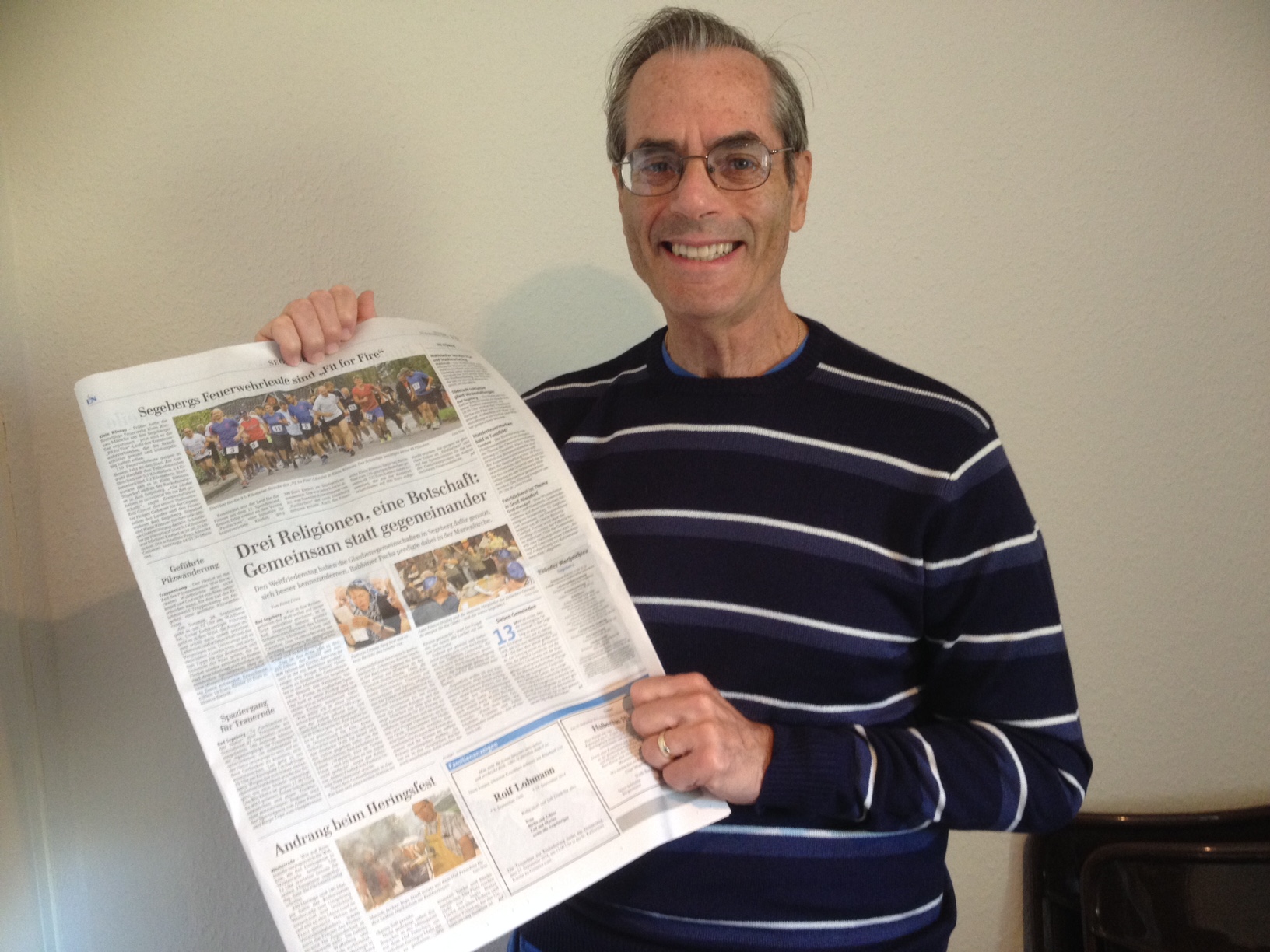
In the photo above I am proudly holding up the newspaper account  of the activities on World Peace Day in Bad Segeberg. I must admit I am unaccustomed to (but gratified by) a review of my sermon in the secular press

It would be hard for me to imagine a more meaningful way to spend the last weekend of 5774 than to participate with the synagogue, churches and the mosque here in Bad Segeberg in World Peace Day.

The Shabbat was very special as Vickie and I saw for the first time the splendor of Mishkan Hazafon (Tabernacle of the North), the synagogue dedicated in Bad Segeberg in 2012. The synagogue sits on a piece of land no one wanted and was built almost completely with volunteer labor. It is a structure of real beauty and spiritual depth. We enjoyed a lovely Shabbat dinner there Friday night and a lively Torah study on Shabbat morning.

Late on Shabbat afternoon we traveled to Kiel to participate in and speak at the Selichot service at the Juedische Gemeinde (Reform synagogue) there on Saturday night. I will also be delivering sermons and offering commentary on the worship in Kiel on Rosh Hashanah and Yom Kippur. As in Bad Segeberg Kiel’s Reform synagogue was built almost completely by the volunteer labor of the community. In both cities the heart, soul, blood sweat and tears of the members who fashioned these structures adds greatly to the sense of sanctity one feels in each place.

The respective leaders of the Bad Segeberg and Kiel communities, Walter Blender and Walter Joshua Pannbacker, are inspiring examples of commitment, enthusiasm and dedication to the task of rebuilding Progressive Jewish life in northern Germany. It is a privilege to know them.

After we returned to Bad Segeberg, our Sunday began with a service at the majestic Marien Lutheran Cathedral in the center of the city. It sent chills up my spine when the Dean of the Cathedral introduced my address to the congregation by saying, “This is the first time in the 800-year history of the church that a rabbi has delivered the sermon.” The response of the congregation to the thoughts I shared was most gratifying.

After the service a wonderful group of Christians, Jews and Muslims traveled in succession to the Roman Catholic church, the Muslim Mosque and the synagogue. We learned a bit about the history of each congregation and enjoyed wonderful informal conversations at the meals each community graciously provided. By the end of the day we were stuffed not only with delicious food, but with an inspiring sense of goodwill and mutual affirmation that Vickie and I will always cherish.

Over the years I have heard many people blame the ills of the world on “organized religion.” My response to that idea is and will remain: “It is not religion that causes problems. It is the inability of people to accept that others have religious views that are different from theirs and to affirm the validity of those beliefs.” Hopefully we can progress toward an era in which we accept, affirm and embrace religious differences! I see great value in learning about how our neighbors’ faiths are both similar to and different from my own.

World Peace Day helped participants in Bad Segeberg to take small steps toward harmony and understanding. May our New Jewish Year that begins tonight see events like World Peace Day multiply around the world, and may they prove small but effective steps in creating a more just, caring and compassionate society for all of  God’s children to enjoy!

Why We Celebrate Rosh Hashanah

Despite the violence that plagues American cities and the growth of terrorism around the world Jews will welcome Rosh Hashanah 5777 on Sunday evening, October 2, with hope that the New Year will be better than the last.

Our New Year celebrates the anniversary of the creation of the world. “This is the day of the world’s birth,” we proclaim each time we hear the Shofar’s (ram’s horn) blast on Rosh Hashanah!

Rosh Hashanah receives very little mention in the Torah, but it grew into the major celebration it is today because our people needed a day to celebrate the message and ideals of Genesis’ magnificent Story of Creation.

The Creation Story is not a scientific account of the world’s creation. It is a religious poem teaching us why we are here. The truths of the creation story are the religious ideas that it sets forth–ideas upon which all subsequent Jewish thought rest.

The first assumption of the story is that God is behind creation.

However the world came to be, our story contends that a single, good caring God initiated the process. God acted with purpose and meaning. That leads to the story’s second assumption: Our lives have purpose and meaning.

In the story, everything builds on what comes before. Note the rhythm and the repetition of certain key phrases: “And God said, “Let there be … and there was … And God saw … that it was good.” And there was evening and there was morning …” These recurring refrains convey a sense of order and intention.

Third, the story teaches that we human beings—not the rhinoceros, the crocodile or the Tiger–are created בצלם אלהים “in the image of God.” That does not mean that we look like God.

It means that we humans are in charge of and responsible for the world.

The Midrash (Bereshit Rabbah 8:11) teaches that we human beings stand midway between God and the rest of the animals. Like the animals we eat, sleep, drink, procreate, eliminate our waste and die. But in a God-like way we have the power to think, analyze, create and shape the environment in a way that far surpasses any other creature.

We are the only creatures on earth that can go to the side of a mountain, mine ore from the mountain, and turn the ore into iron, the iron into steel and with that steel forge the most delicate of surgical instruments to heal and to save lives.

We are, also, the only creatures that can go to the same mountain, mine the same ore and from that ore fashion bombs and bullets whose only purpose is to kill and to maim.

The overriding message of the story is that God wants us to use our power to form a just, caring, and compassionate society on earth. But we–not God–must decide if we will.

The final religious teaching of the story concerns Shabbat. On the seventh day God rested, and God wants us to rest too, but not just in the sense of relaxation. God wants us to have a day each week to step back and ponder how we can do a better job of fashioning the type of society God wants.

Genesis’ magnificent creation story teaches that God entrusts the earth to our care. It is, though, as the Midrash (Ecclesiastes Rabbah 7:13) reminds us, the only earth we will get.

May that knowledge inspire us to care for it lovingly and use the talents with which God has blessed us to hand over a safer, sweeter more ecologically sound world to our children and grandchildren! That is the hope we celebrate on Rosh Hashanah. May all who read this essay–wherever you may be in the world–revel in the potential of Creation, and may the blessings of health, joy and meaningful living await you in the New Year!

Rabbi Stephen L FuchsAn apple dipped in honey is traditionally eaten on Rosh Hashanah to symbolize our hope for a sweet New Year.
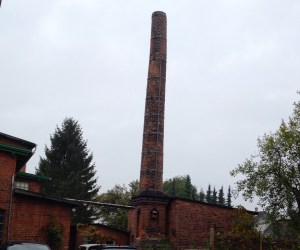
O the Chimney

Chimney at Cafe Spindel, Bad Segeberg, Germany photo - Version 2

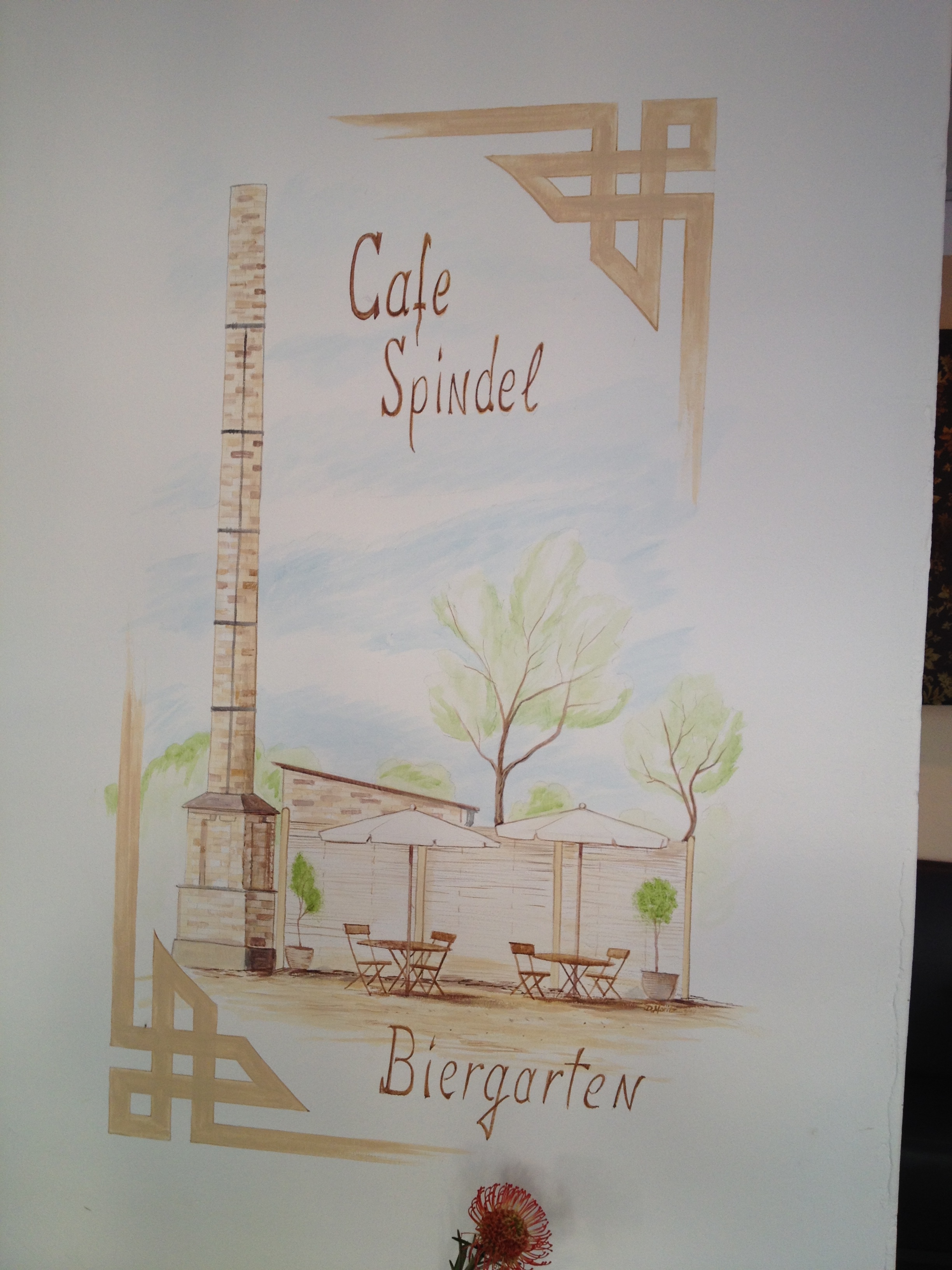
Der Spindel is a quaint café in the center of Bad Segeberg that used to house a wool-processing factory. Because it was an unseasonably warm and sunny late summer day, our host Pastor Martin Pommerening suggested we sit outside.

The setting was pleasant, the conversation was delightful, the food was delicious, and then I looked up and noticed the tall chimney attached to the old wool factory. I shuddered as Israel’s Nobel prize winning poet Nelly Sachs’ famous poem seeped into my brain:

O the chimneys

On the ingeniously devised habitations of death

When Israel’s body drifted as smoke

Through the air …

The impulse to run out of the courtyard was strong, but the atmosphere of friendship and the goal of reconciliation, which brought me to Germany, were stronger. I will never be free of evocative stimuli that will bring Holocaust reflections in their wake.

And yet 

Germany as a nation has done so much to try to atone for the horrors of The Shoah. That does not mean—nor should it—that we shall ever be free of our memories. But can we be free of the anger and antipathy they evoke?

By coming to Germany to teach and speak in synagogues and churches for ten weeks Vickie and I testify that our answer is, “We will try!” It is not always easy, but the effort that has gone into preparing for our trip makes it easier. I can only imagine the hours of time and energy that Pastor Ursula Sieg has devoted to every detail of our visit. The hospitality of Ursula and her husband Martin is so kind and genuine that we shall win this struggle. We shall win it over and over again every time there is a reminder of the horrors of the past.

Each year during The Days of Awe we examine our actions of the past year with a close eye on our shortcomings and the things, which we have done that we regret.

A crucial part of the process is to go to the people we have wronged and ask for their forgiveness. Without these steps our prayers for forgiveness that we shall say on Yom Kippur are meaningless.

And, our tradition teaches, when we sincerely approach someone we have insulted or hurt and ask them to forgive us, they have an obligation to do so. If they refuse us more than twice, the burden of the sin transfers to them!

I cannot speak for other Jews, but I have made the decision to heed and apply this teaching to our people’s greatest horror. Germany has asked our forgiveness so many times and in so many ways! As I ask those I have wronged to forgive me, I feel the obligation—even in this case–to forgive as well!

Why?

We cannot undo the past, but the future is ours to shape!

Book Excerpt: The Binding of Isaac–Scriptures Most Troubling Story

As I sit here in Germany, site of the horrific human sacrifices that forever changed the course of our people’s and all of human history during the Shoah, I think of the story of the Binding of Isaac (Genesis 22) that we read in a few days from the Torah on Rosh Hashanah. I feel many people completely misunderstand the story’s vital message.  I hope this excerpt from my just released book, What’s in It for Me? Finding Ourselves in Biblical Narratives enables the story to speak directly to us.


Perhaps Scripture’s most puzzling and profound stories is the near sacrifice of Isaac. How, we wonder, could God ask such a thing? How could Abraham agree? Why does Abraham, who stood up to God and protested mightily on behalf of the strangers in Sodom and Gomorrah, not object when God instructs him: “Take your son…whom you love, Isaac, and offer him as a sacrifice on one of the heights that I will point out to you” (Genesis 22:3).

The answer is that after his argument with God over Sodom and Gomorrah Abraham knew God was just and knew that he could trust the Almighty even when God asked him to do something seemingly unthinkable: Sacrifice his own son. Some interpreters assert that by taking Isaac to Mount Moriah, Abraham failed God’s test. Others opine that while he might have been a great religious leader, he was a failure as a father to Isaac and a husband to Sarah. How else, they ask, could a good man be willing to sacrifice his own son? I contend, respectfully, they miss the point.

Human sacrifice was the principal scourge of the pagan world to which the new covenantal religion objected. The new religion that evolved into Judaism completely rejected human sacrifice. It is that horrific practice, which, I submit, the story of the Binding of Isaac decries. In beckoning Abraham to Mount Moriah to slay his son, but staying his hand, God sends a message that humanity still struggles with today. No civilized religion can accept human sacrifice in its name. From the ancient world out of which the covenant emerged, to the Spartans of ancient Greece, the Incas, Aztecs, Mayan, and Hawaiian civilizations of other hemispheres, pagan religion has always involved human sacrifice.

Indeed, a serious student of the Bible understands that the perceived efficacy of this horrific form of human behavior was difficult to uproot from the mindset of the ancient Hebrews as well. No fewer than fifteen times does the Hebrew Bible protest human sacrifice or cast it in a shameful light. Does a parent ever tell a child not to do something fifteen times when the parent has no worry whatsoever that the child will do that thing in the first place? Of course, not!

No biblical story illustrates how difficult it was to convince our ancestors that human sacrifice was an abomination better than the story of Mesha, King of Moab (ca. 850 BCE). Mesha had paid tribute to King Ahab of Israel, but rebelled after Ahab’s death. In the ensuing battle, the Israelites were routing the Moabite forces until (in the words of the Israelite biblical author), “Seeing that the battle was going against him, the King of Moab…took his firstborn son and offered him up on the wall as a burnt offering. A great wrath came upon Israel, so they withdrew from him and went back to their own land” (2 Kings 3:25-27). The point of this amazing story is that the biblical author clearly believed that Mesha’s act of human sacrifice is what turned the tide of battle in his favor.

When we evaluate the revolution in human thought that the God of the Hebrew Bible represents, I contend that the absolute rejection of human sacrifice is even more significant than the insistence on one God as opposed to many gods and the rejection of idol worship!

Critics of Abraham’s behavior in the story of the Binding of Isaac point out that God never again addressed Abraham directly after the incident. So what? This does not change the reality that Abraham remained God’s active covenantal partner until the end of his days. His acts of covenantal responsibility at the end of hislife were every bit as significant as those earlier in his covenantal career.

Why did God ask such a thing of Abraham? And why was Abraham willing to do it? God and Abraham had a unique relationship, which illustrated a brand new way of experiencing God to the world. Unlike the pagan gods, God in the Torah is not simply a force to appease. Rather, God is the source of moral and ethical values that brought a much higher level of civil thinking to the world. One of the vilest aspects of the pagan world was human sacrifice. It is befitting, then, that God and God’s unique covenantal partner, Abraham, should present a dramatic demonstration to the world that human sacrifice should never occur. That is why God could ask Abraham to do the unthinkable. That is why Abraham, who protested so forcefully for the sake of strangers in Sodom and Gomorrah, so willingly complied with God’s request.

Suppose for a moment a parent called me and said, “Rabbi, you will not be seeing Petunia in religious school anymore because this morning, God told me to take her to the mountains and offer her as a sacrifice.” Naturally, I would do everything possible to convince the parent that the voice he or she heard was not that of God. Moreover, I would do everything, including notifying the police, to stop him or her from doing this.

Of course, the scenario I just proposed is absurd. Nevertheless, we have yet to learn not to sacrifice our children. It happens all the time. It happens each time we send our children to fight wars over conflicts that could better be settled by negotiation. It happens each time we force our children into pursuits or professions to satisfy our own ego’s needs. It happens every time we overwhelm our children with pressure to succeed, never letting them feel that they are good enough.

The great British entertainer Lena Zavaroni (1963-1999) is a case in point. Born on the tiny Scottish Isle of Bute, Lena Zavaroni was an amazing musical talent with a magnificent voice and boundless charisma and charm. As a little girl, her aunt whisked her off to London to pursue fame and fortune. She achieved both in spades. By the time she was ten years old, she had appeared on The Johnny Carson Show, toured Japan, and sung for Queen Elizabeth and President Gerald Ford. By the end of her teenage years, she had starred in three successful British TV variety series. She was the highest-paid entertainer in the United Kingdom. View her YouTube video clips. She was amazing.

Ah, but when she was still a young girl, people began to tell her that she looked a bit pudgy. To make a long, sad story short, Lena Zavaroni⎯once the richest teenager in the world, adored by millions⎯died broke and penniless from complications of anorexia at age thirty-five.

Beautiful, precious Lena Zavaroni was every bit as much a human sacrifice as Jephtha’s daughter (and the rabbis of the Midrash condemn Jephtha as a fool) in Chapter 11 of the book of Judges. Every time I watch her sing, I want to reach into the computer screen, hug her and promise, “I won’t let anyone hurt you!” But it is a promise I could never make, let alone keep. And Lena Zavaroni, who appeared thinner and thinner with each passing year of her young life, is just one of millions of examples of horrific human sacrifice we have offered throughout the centuries and continue to offer today.

Yet many contemporary rabbis and others bemoan the fact that God asked Abraham to sacrifice his son. They just don’t get it! They just don’t get that God and Abraham tried to teach the world a vital lesson⎯a lesson we still have not learned.


My Ten Most Influential Books

Michael Amram Rinast has invited me to list the ten books that have influenced me the most. I will gladly name ten books that have had great impact on my life, but I can’t swear there are not others that have had equal significance to me. These are the ten that come to mind now:

1. What’s in It for Me? Finding Ourselves in Biblical Narratives — Forgive me if this seems egotistical, but this book has been percolating in my mind and heart for forty years.

2. The Book of Genesis–The first book of the Torah–more than any others has influenced  the way I think and try to act. Other biblical books could easily make this list, but one biblical bookstands out for me, and I want to make note of that.

3.The Days of Awe by S.Y. Agnon–Within the next few days I will post another essay that will make clear why this book means so much to me.

4. The Rabbi by Noah Gordon–It is no exaggeration for me to say that reading this book for the first of many times when I was 18, shaped the direction of my life. It was an honor to mer Mr. Gordon in 2001and share this with him in person

5. Horton Hatches the Egg by Dr. Seuss–To me this is by far the greatest of many great Dr. Seuss books. It is a marvelous lesson in loyalty and honor that first touched my heart when my teacher, Mrs. Naomi Asher, read it to us in second grade. It still touches my heart today.

6. Call It Sleep by Henry Roth–The gritty story of Davy Pearl’s coming of age inspires me for its lack of sentimentality and the amazing insight it offers into childhood emotions. As an adult I continue to resonate to those emotions.

7. The Jews of Silence by Elie Wiesel–This ground breaking expose of the plight of Soviet Jews in the sixties alerted the world to the issue which galvanized the Jewish world for nearly two decades

8. Night by Elie Wiesel–It is hard to imagine that the Holocaust would hold nearly the place it does in the minds of people of all backgrounds today were it not for Wiesel’s haunting memoir.

9. Riding the Bus with My Sister by Rachel Simon–Unsurpassed for it realism and sensitivity to the issues of people with disabilities

10. (TIE) Basic Judaism and As A Driven Leaf both by Milton Steinberg. Basic Judaism opened my eyes as a high school student to the necessity of distilling the essence f Judaism in such a way that encourages people to build on their learning. As A Driven Leaf, which weaves a magnificent historical novel from a few small fragments of Talmudic and Midrashic evidence, opened my eyes to the beauty and possibilities inherent in creative Biblical interpretation.

I hope you like my choices and invite interested readers to share yours.